The Workbench Part 1

I will never say there is a “right” way to do something (except for safety). Today I will show you my workbench set up. It’s right for ME, but you’ll find your own best set up. We’ll cover tools and layout today, Next post will cover accessories and supplies. 

Layout
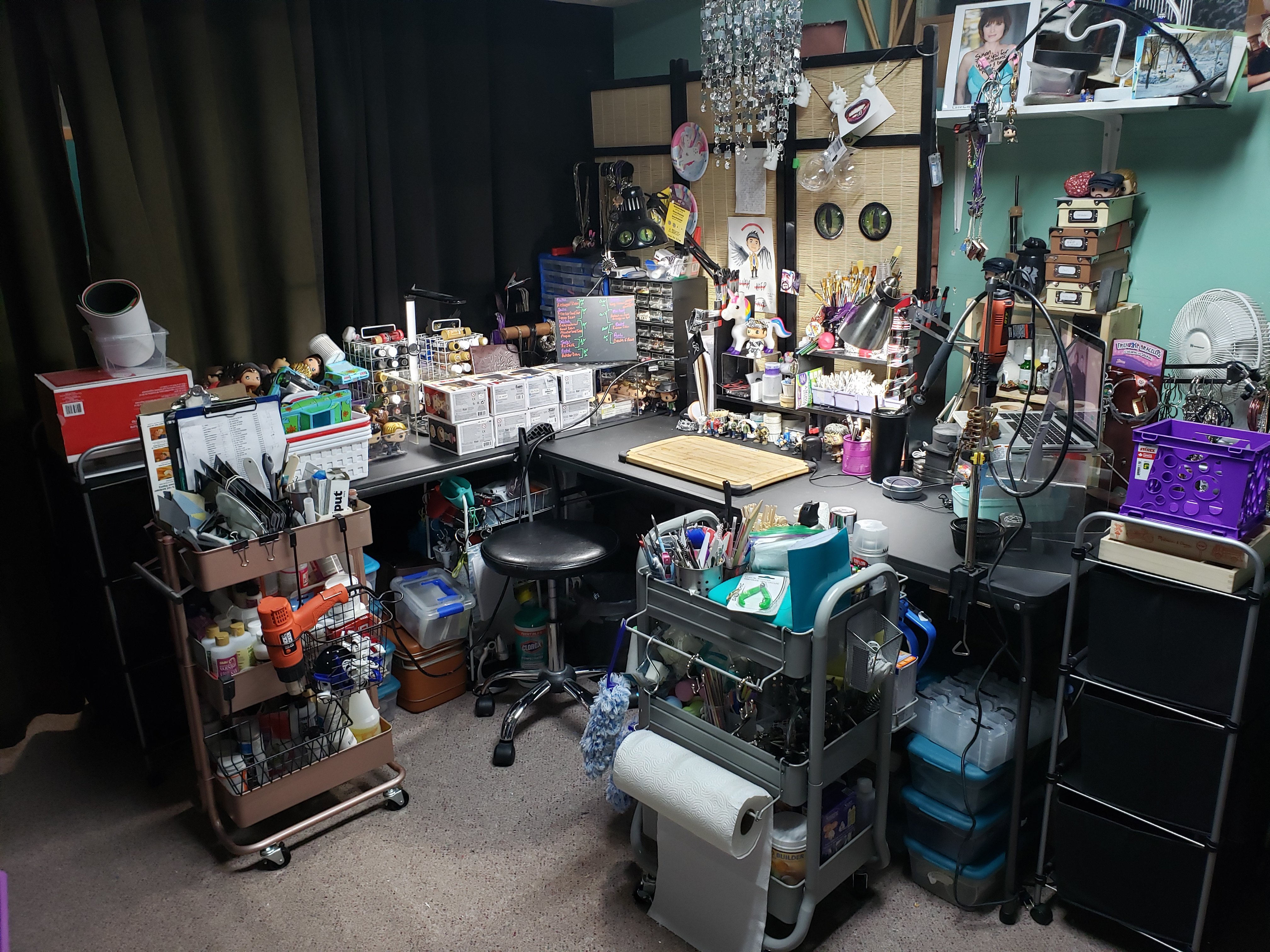
Wide view of the workbench.

I’ll start with the basic layout. I use an L shape comprised of two plastic tables. I also have a wooden tray table that is supposed to be put away at some point, but .. meh. The wooden table holds my Windows laptop, so it’s used for references and entertainment. Directly in front of where I sit is the cutting board that I work on 90% of the time in an effort to reduce the damage to the table. It’s easier to replace a cutting board. In front of that is the shelving that holds disposable supplies, brushes, acetone and such. Most importantly is my mascot, King Jensen, unicorn and Bacchus coin. Above are things that make me smile.
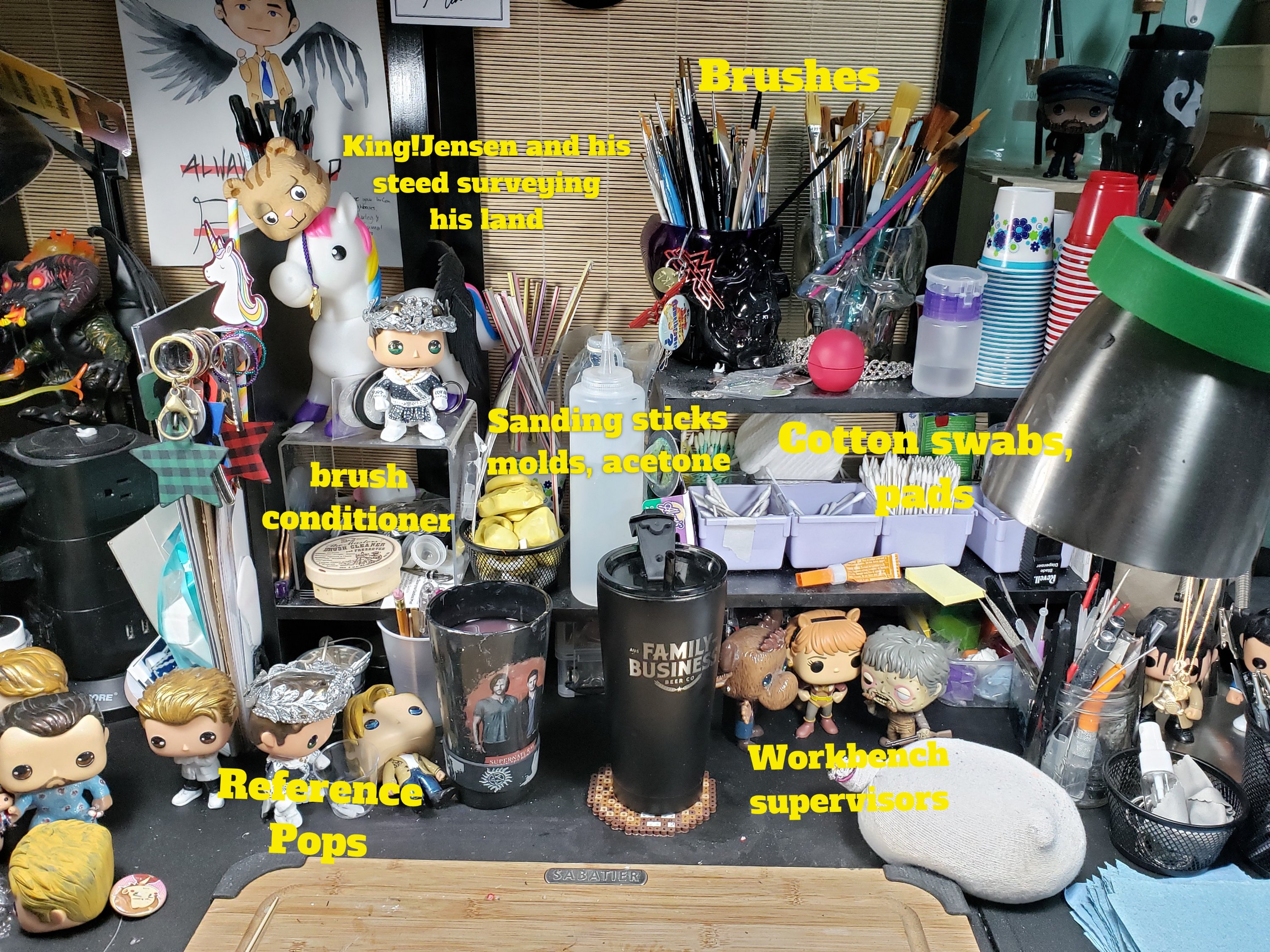
The heavy use area of the workbench. With the important things, like my winged unicorn impaling a bear/tiger while King!Jensen rides him

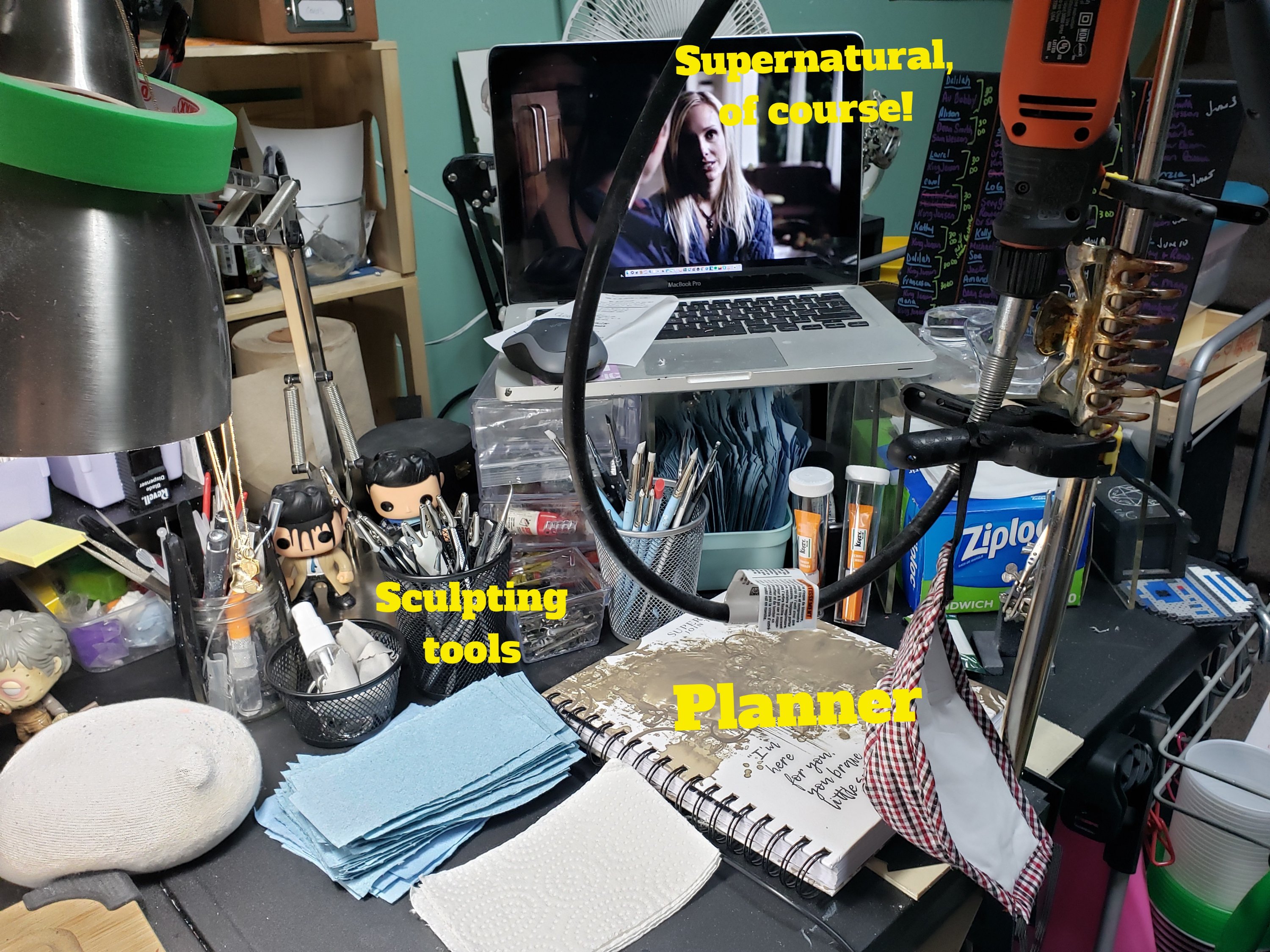
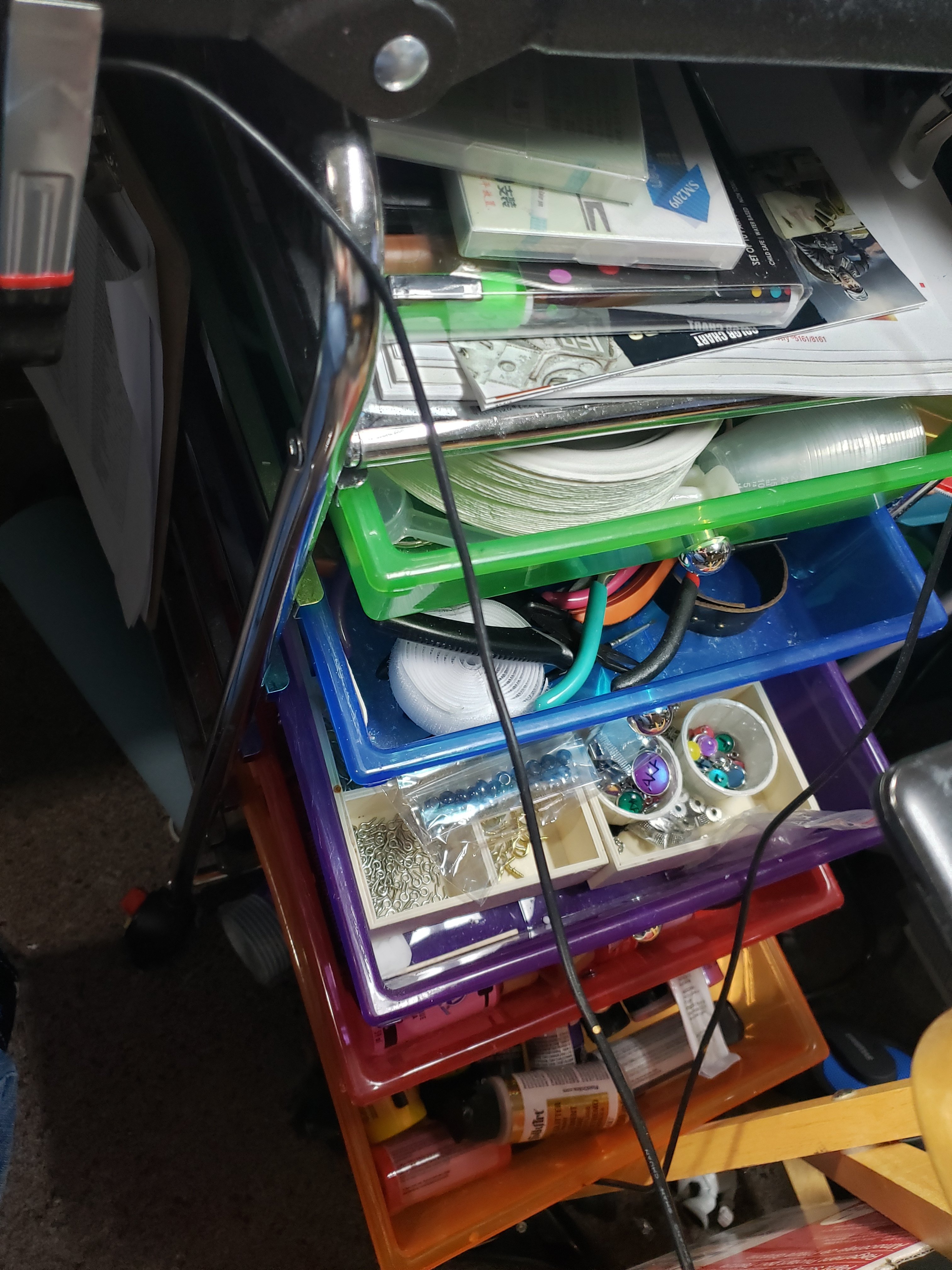
To my left is my planner, Mac (used for watching Supernatural while I work) and containers with sculpting tools, sharps, glue and my workbench list sorted by due dates. Below that is a set of drawers with plates (my palette at times), small tools, AKF raw materials, overflow paint and specialty paint (colour change, metal finish and such)
To the right. on hand things
The drawers that hold common things like plates, tools, akf and extra paint

To my right will be broken into 2 areas. Pops and Jewelry/etc. For Pops, this is where the containers of pops on the go are stored and labelled. Weekly I go through new orders and gather the supplies (bodies) I need, break them down and sort. This lets me grab parts I need quickly. Also is my main paint storage, made from PVC pipe. I kinda love it. My metallic paints are in the separate holder for ease. Above that is a light, finished pops waiting for the rest of their orders and my bits for the Dremel.
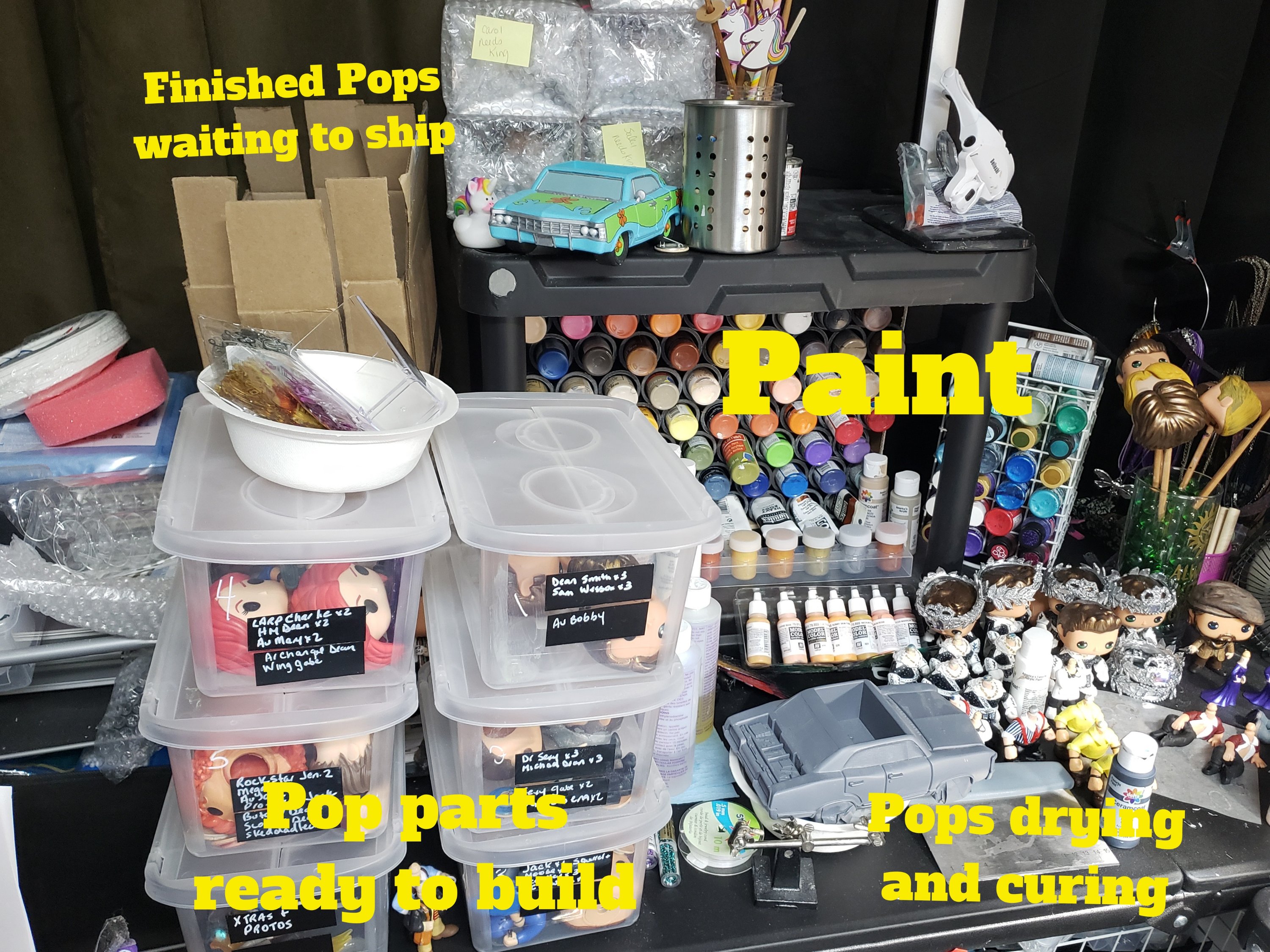
To the left. Prep area, drying are and paint

The Jewelry/etc area is in the corner. Holding the storage for charms, items in progress and stands to hold chains and leather strapping. There are other containers holding more supplies that are brought in as needed. This poor area has been neglected lately with the amount of pops on the workbench.
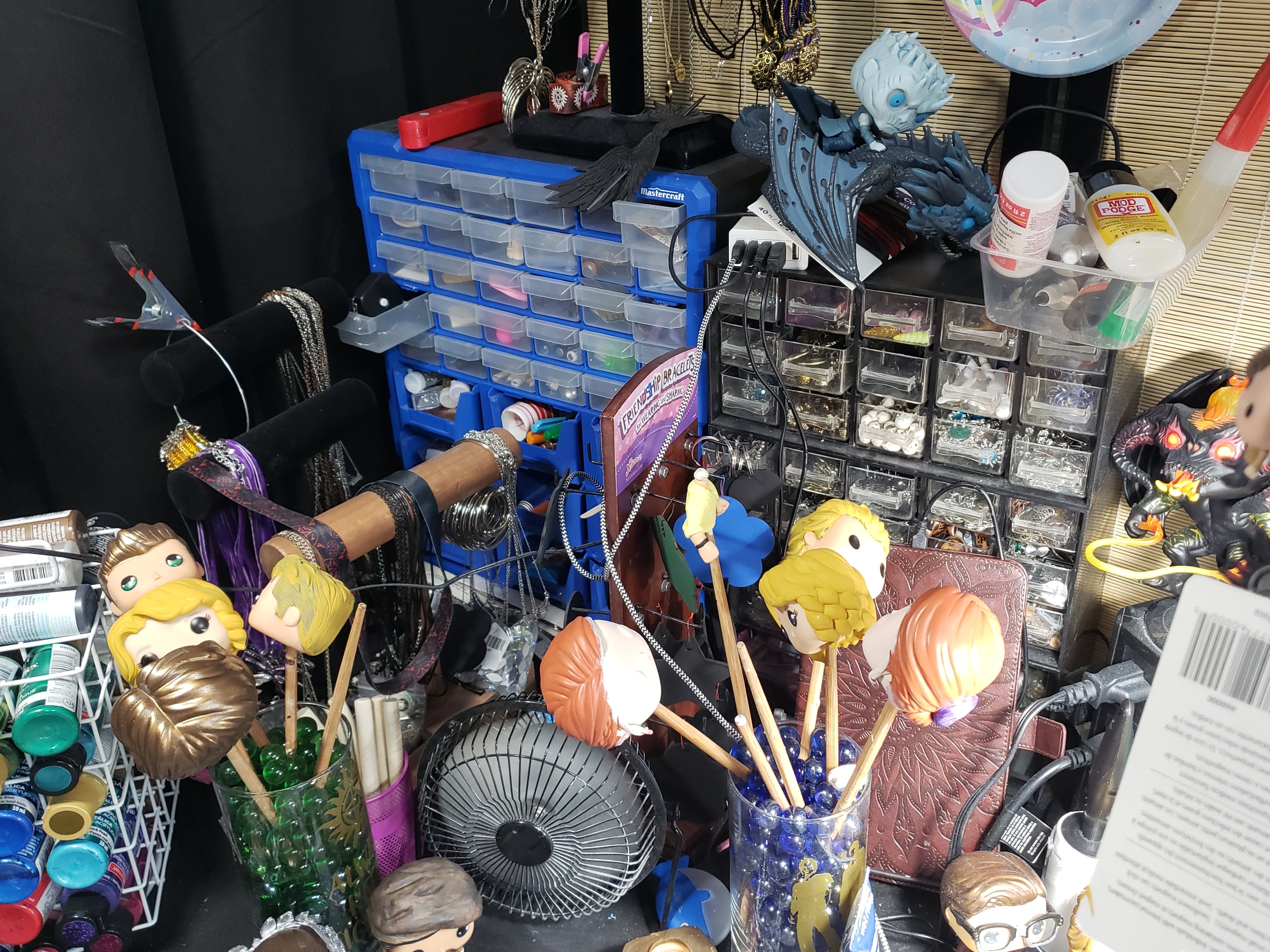
Jewelry area, cramped now as pops are taking over!

Below is …. well… stuff. It’s cabochon storage, Metal stamping supplies, wax seal supplies, polishing supplies and anything else I can’t find another place for.
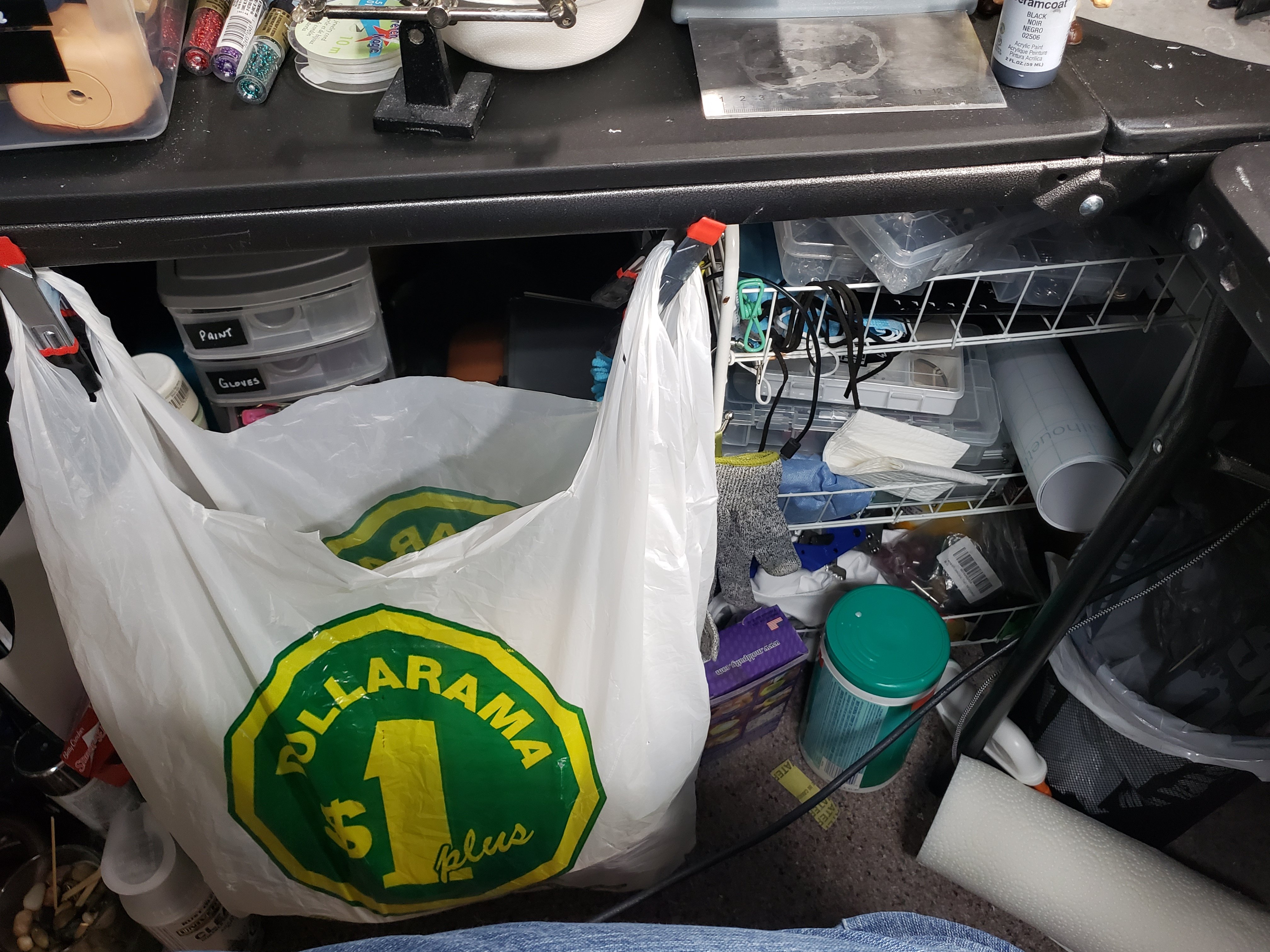
Everything else. garbage bag, paints, metal stamping, cleaning, spray paints,

Tools

The first thing to know is NONE OF THE TOOLS ARE IMPERATIVE. They make things easier, but you can start with just basics and still do a good job. I’ll outline what I use most and why, but you’ll find what works for you. A lot of what I use are geared to mobility. Anything to ease my hands is helpful.

My Rotary Tool is one of the 2 most used items. With different heads it can cut, smooth, carve, polish, sand and makes quick work of a lot of the processes. I have an off name one, bought at Canadian Tire for about $40 (CDN) I splurged and bought a flex shaft attachment which is incredibly helpful. it allows easier movement and longer use without less hand strain. Most rotary tools have similar size of shaft so heads are often interchangeable, especially with different colletts.
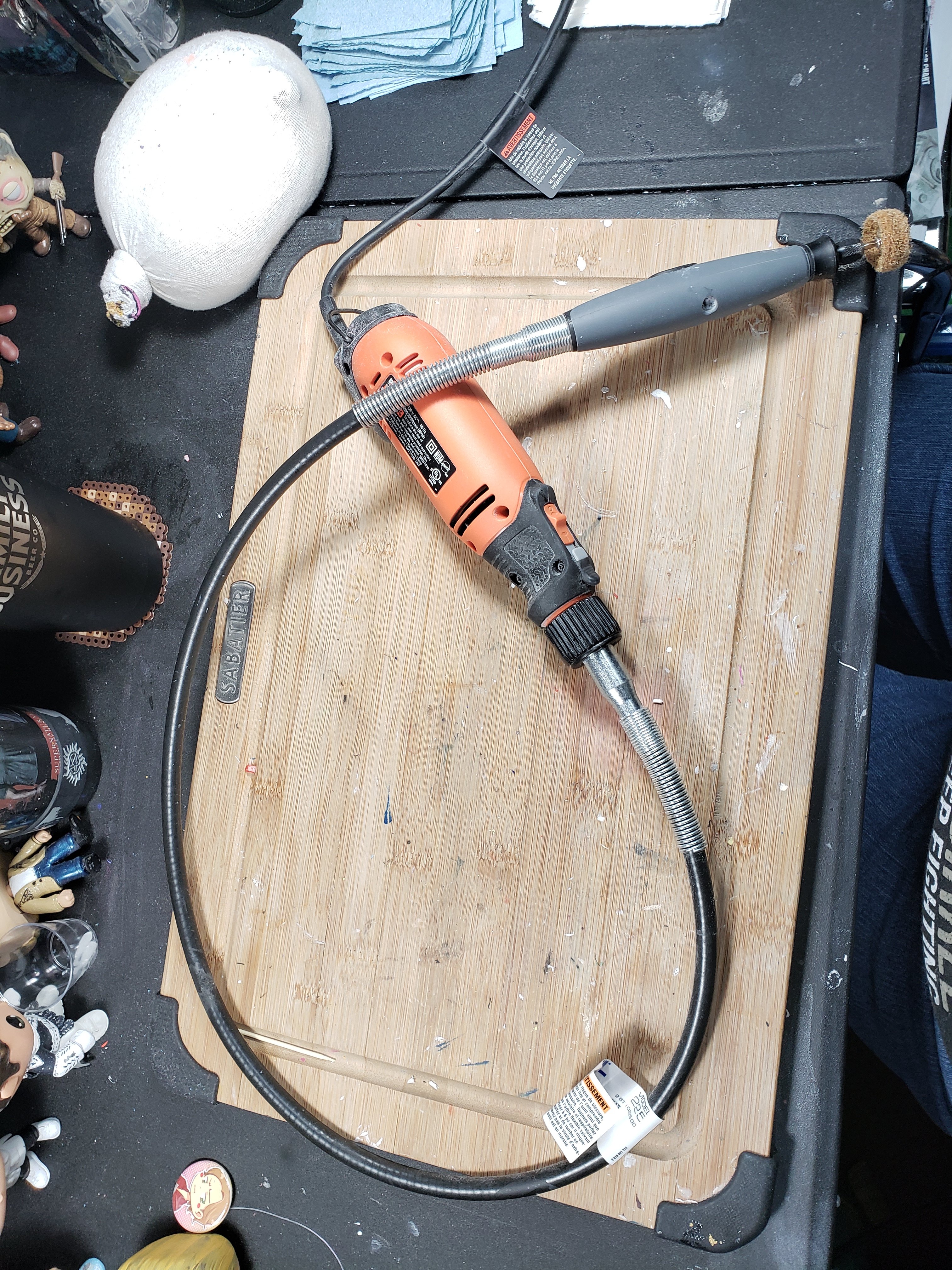
Black and Decker Rotary tool and Dremel flex shaft attachment

My Heat Gun is the 2nd of the 2 most used items. It cures polymer clay, heats pops to move arm/leg positions, softens glue to take them apart, heats plastic to form into shapes and occasionally heats up my lunch! I have a Black and Decker dual temp gun, but started with a craft heat gun meant to heat embossing powder that I bought at the craft store for 19.99 that worked just fine. The scale of what I do made it impractical but for most that, or even a good hair dryer may accomplish what you need. You can use an oven to cure sculpy and that works fine, I just don’t want to keep schlepping upstairs, so the heat gun is quicker and more direct for me.
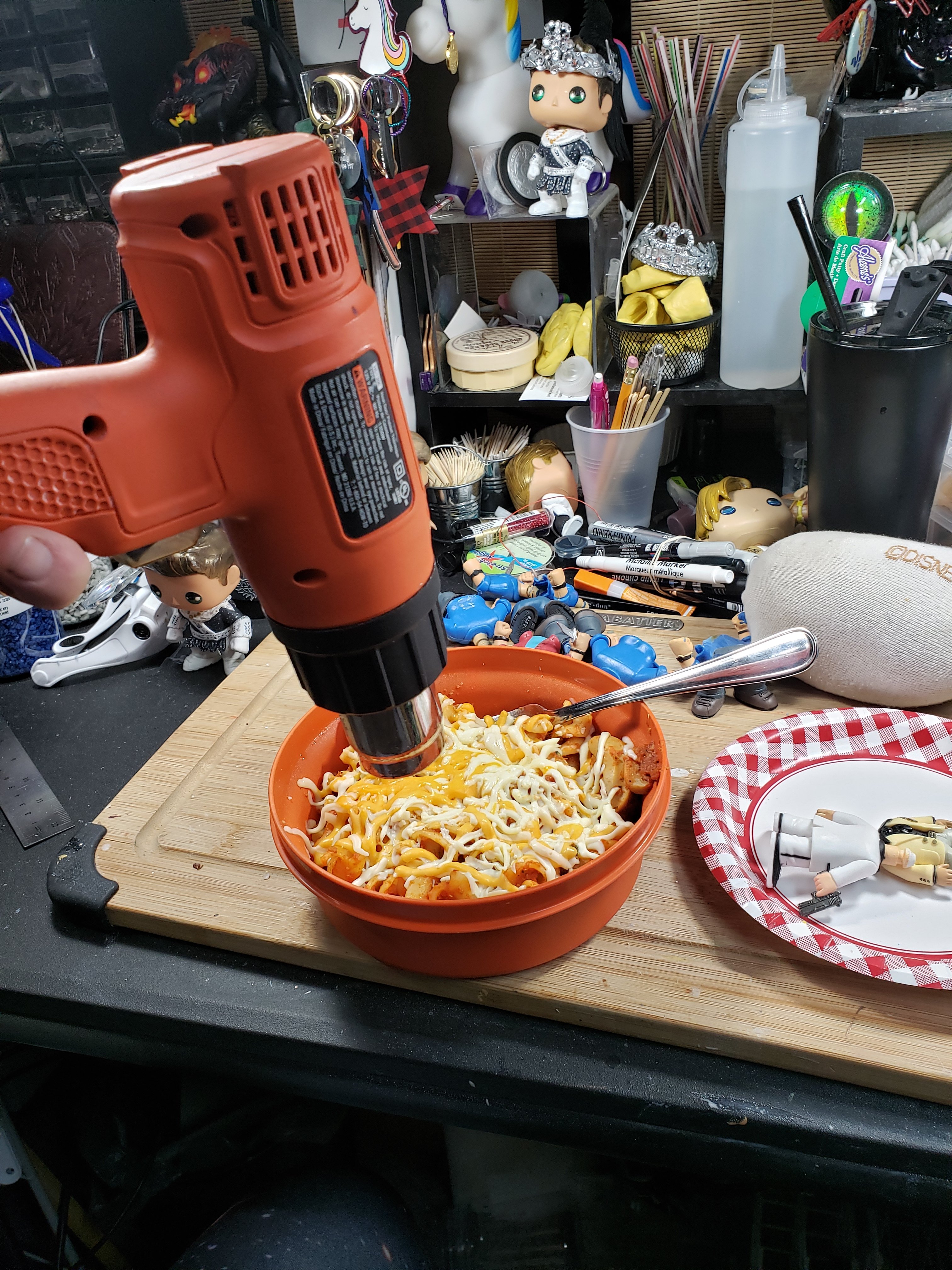
Black and Decker heat gun doing important work!

A Hot knife is something I use on occasion. It works when you need to cut your pop or plastic fairly detailed or neatly. The one I have can also burn wood and has a series of attachments. I don’t pull it out every day, but when I do it’s always a good time saver and helps with neat cuts.
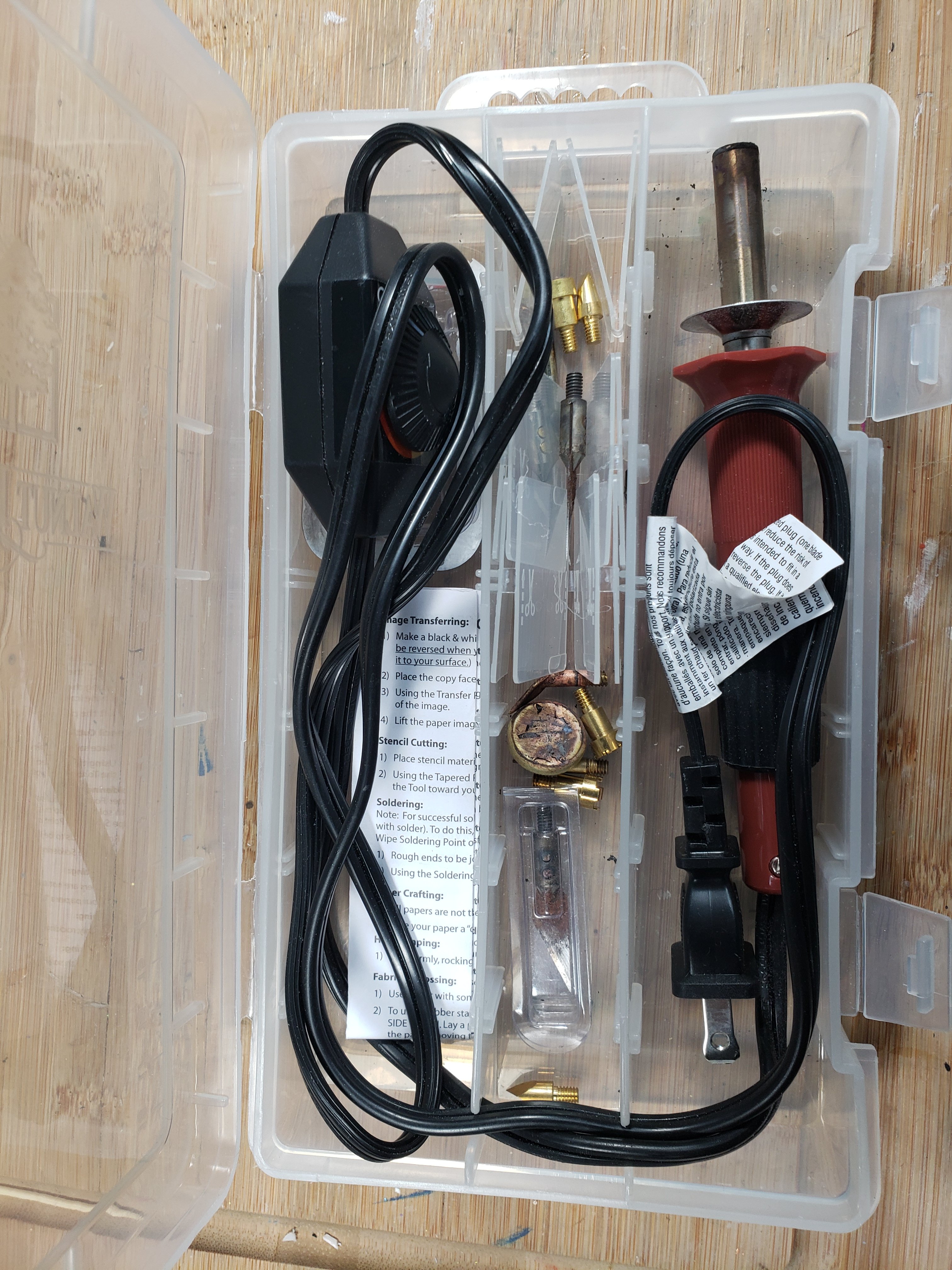
Hot Knife/soldering iron/hot stamp. Useful but not used as often because of heat up/cool town time

A glue gun is handy for some, but I don’t use it often. Usually just for Sparkle the Manicorn to glue his hair down. The pros is that it is a quick hold, but often not strong enough for many items. It can help to tack things in place while you wait for the better glue to set. It can also be used to make designs, like on the Book of the Damned, to be painted over. For glue, I prefer Weldbond, E6000 or Super Glue, keeping in mind Super glue will dissolve paint, sometimes dries white and is not suitable for rhinestones as it will bubble the reflective backing.

Not a glue gun. It’s put away and I’m too lazy to dig it out right now.

These are the basics. There are others, knives, scrapers, clamps and such, but this is what I use on a daily basis. Again, to stress, you don’t need all this to start. You can boil your heads to get them off, use a hair dryer to soften glues/bend arms and sand by hand. Once you get the feel for customizing, you can decide if you want to invest in some tools. Feel free to leave a comment or question below!

Pop Boxing (The not sporting kind)

I’ll admit, shipping is one of my least favourite things. Packing, modifying inserts, weighing, navigating the shipping software… it’s all just a pain in the booty. Shipping starts with the insert.

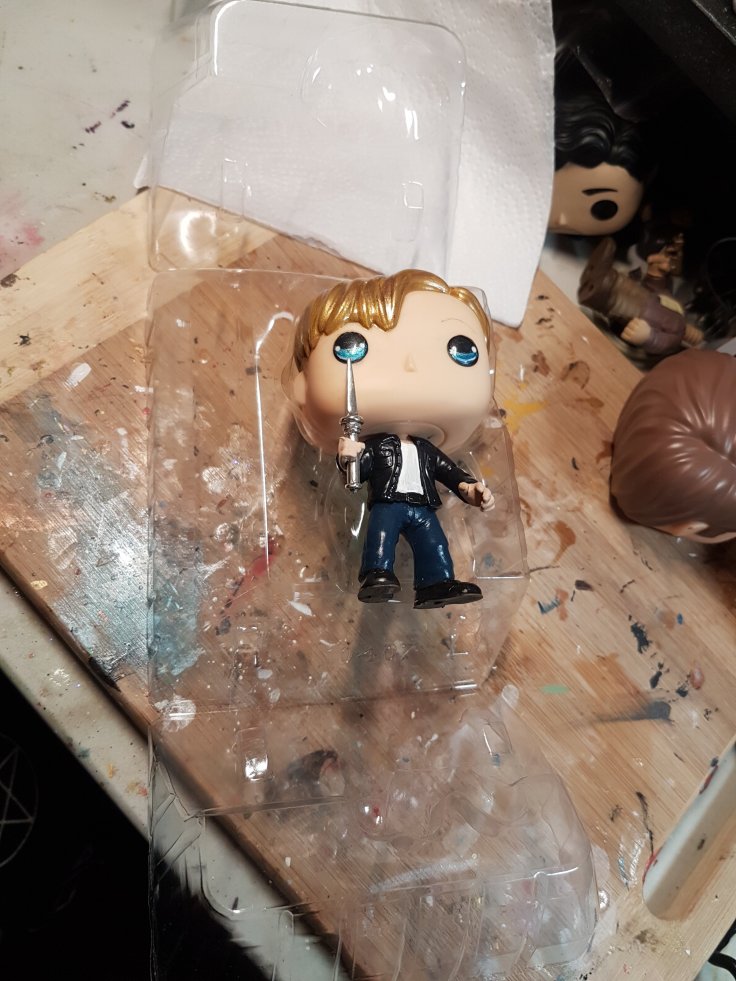
After the pops have dried for a few days, they need an insert. Some pops can go into an insert as is, but most need some sort of modification for accessories, heads, wings etc. That’s where it gets tricky. The one in the picture here is AU Jack. He’s a good one, as I can use the base insert for his body (Scott McCall, usually) and it will fit his head, and as he’s a Mag Wing pop, his insert doesn’t need to be cut to accommodate permanent wings, they get packed separately. The insert goes into a soft pop protector. This holds them secure, and can be used for display. To be honest, I don’t like making custom boxes, because they hide the pop. I want people to be able to see all of it.

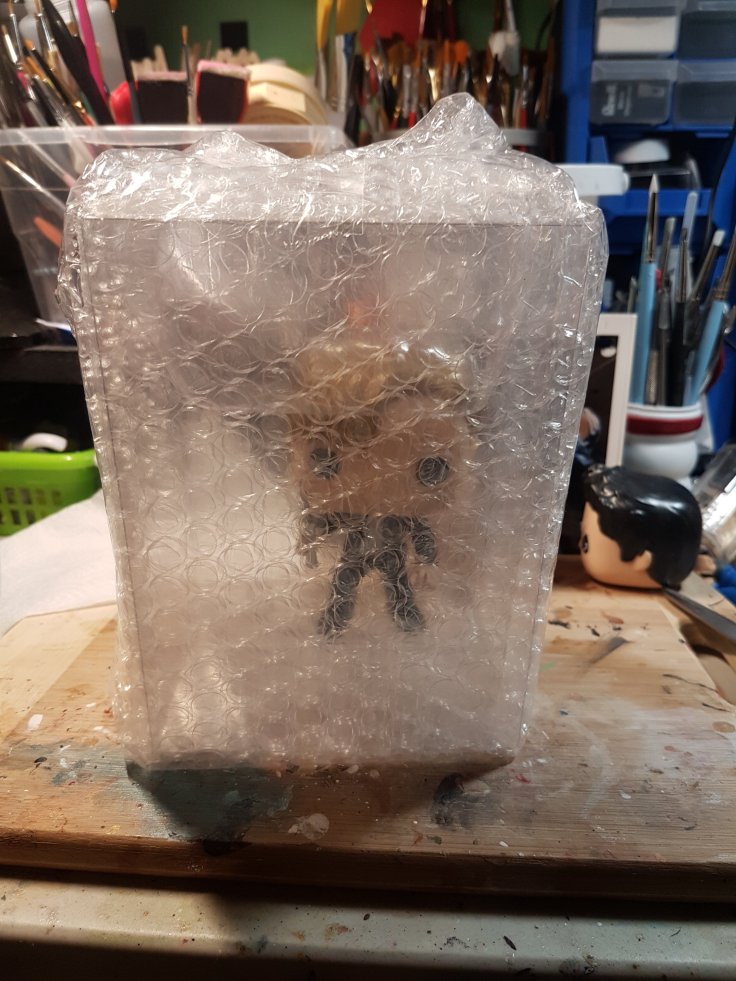
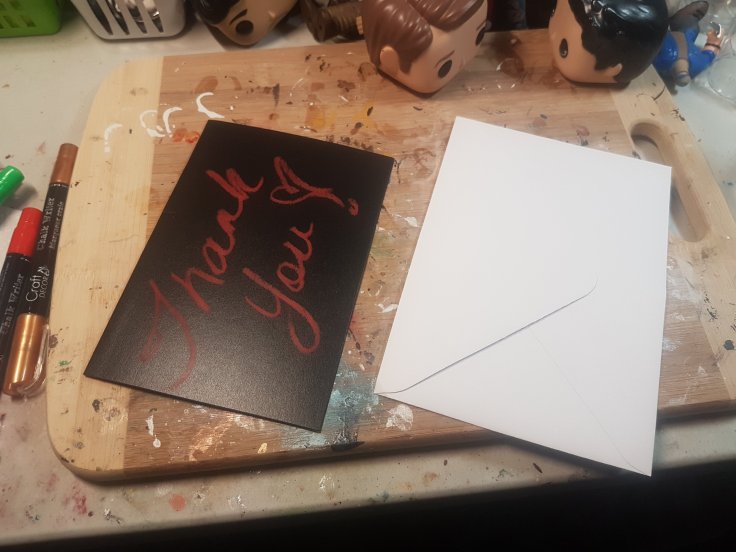
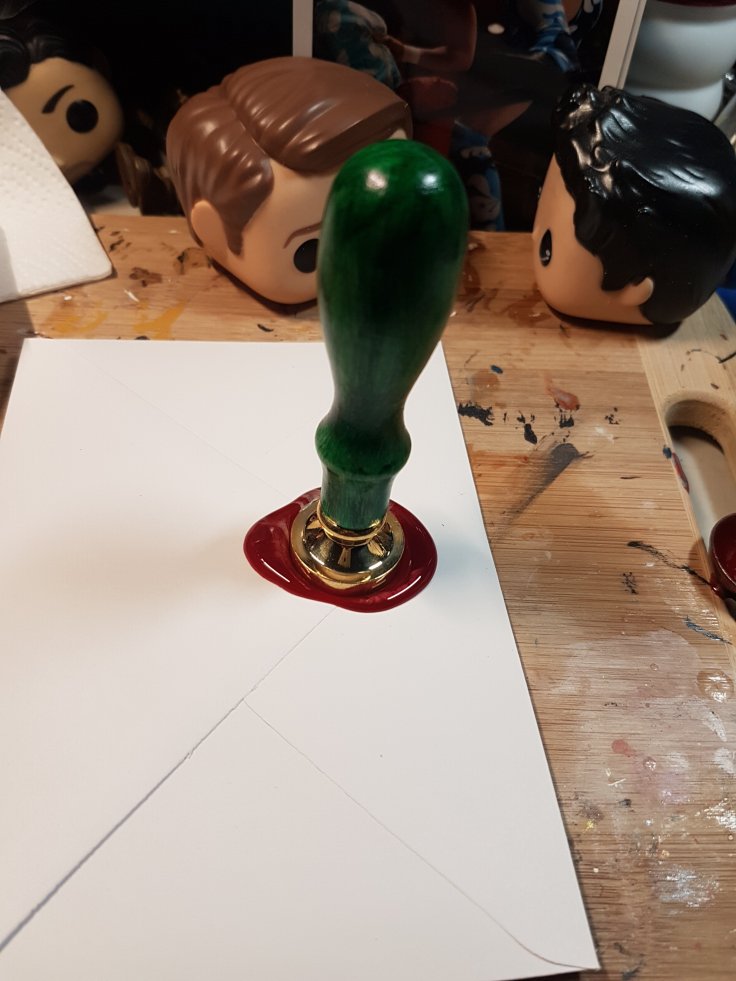
The pop now gets bubble wrapped and a box is sized up for it. I’m lucky in that I rarely have to purchase boxes, but it does mean some extra packing sometimes. extra space is usually filled with air bags. Then the thank you note. I used to hand draw all of them and seal them with wax, but that became too time consuming. Now they are preprinted cards with care instructions that I will add my personal note to. I can still seal with wax when I have time. An AKF item goes in as a thank you gift and the box is sealed.

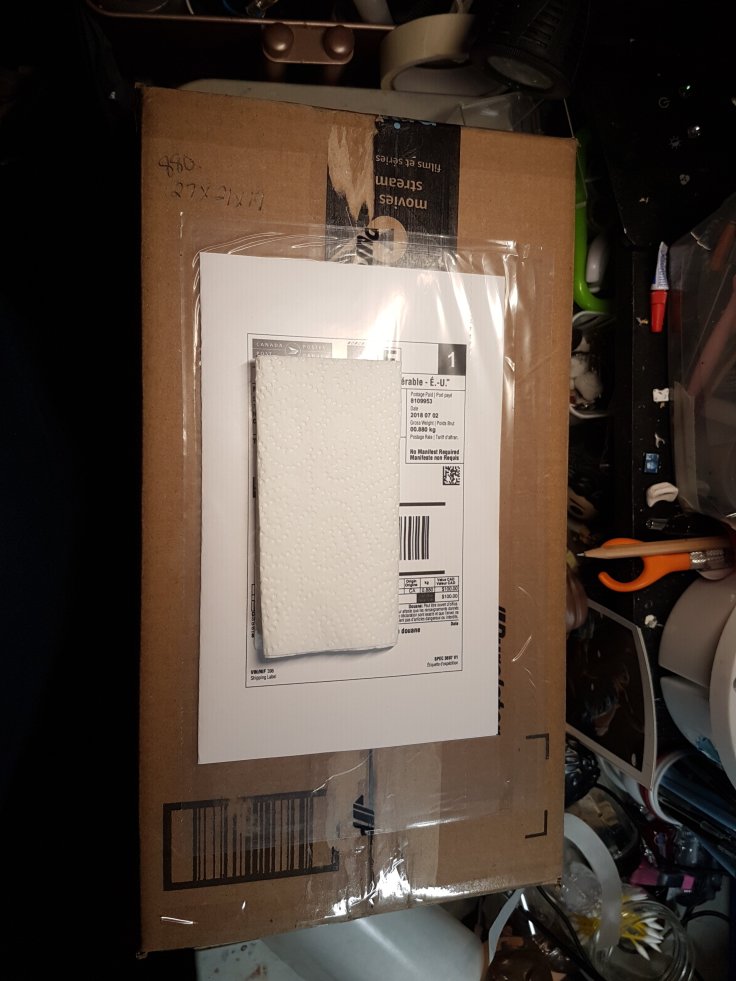
After that it’s just a matter of printing the labels and dropping them off at the post office so they can be on their way to their new homes.

The Making of a King

This year, Jensen was the King Bacchus at Mardi Gras with an outfit that screamed to be popped! I made one for me, but the process ended up being to time consuming and not practical for sales, so back to the drawing board!

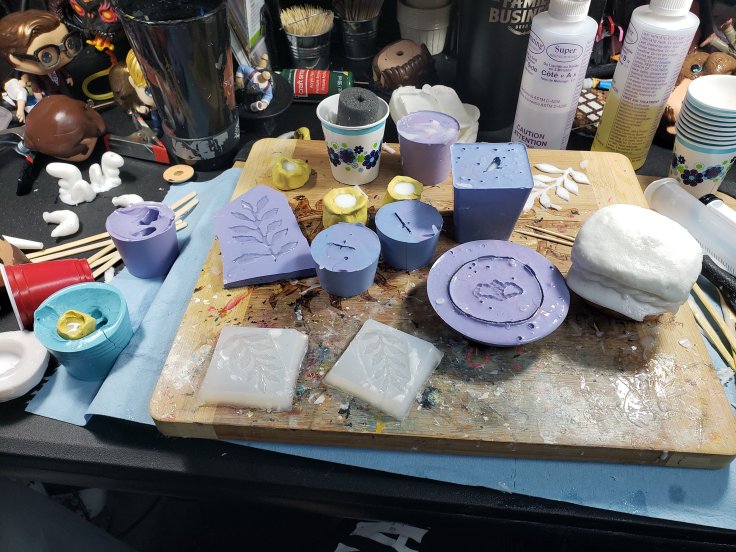
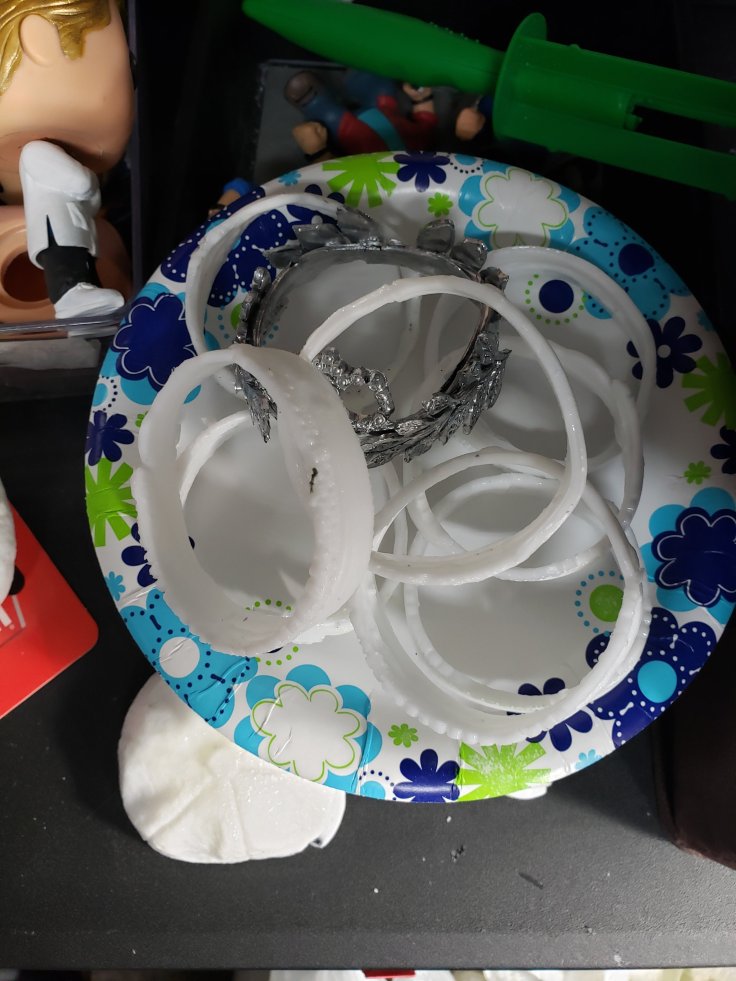
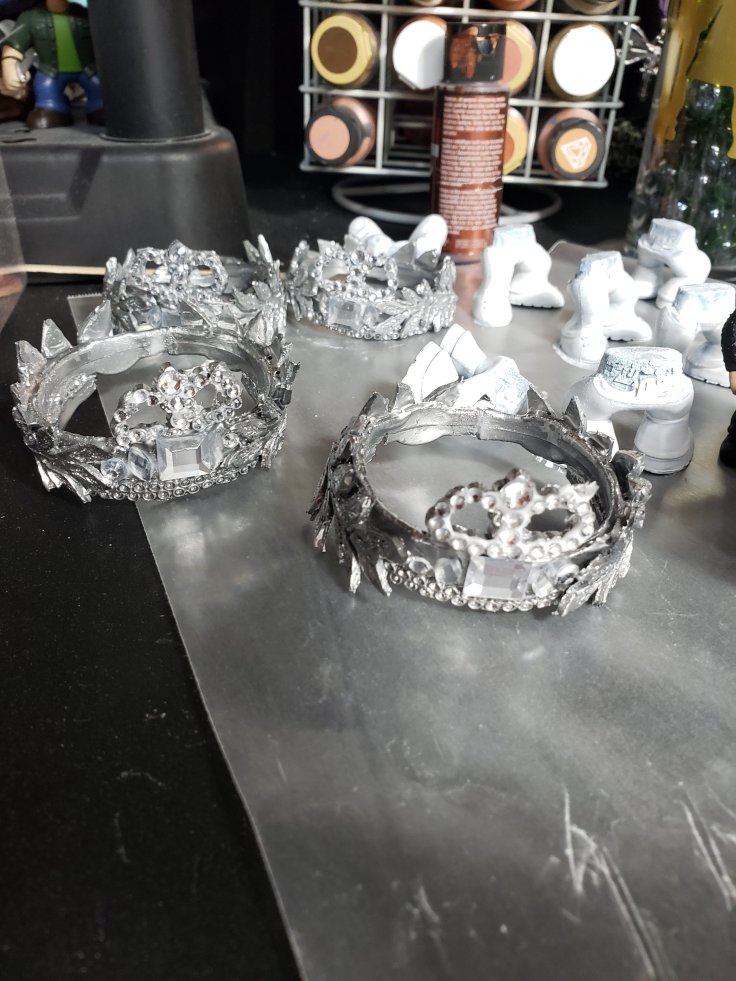
For his crown, I figured casting would be the best bet. I sculpted the leaves from Sculpy, cured them and cast them in 2 different mediums, a clear silicon and Oomoo. I also made a mini crown from a dollar store Disney crown (do NOT tell the babies!) I cast that as well. The base of the crown was the base of the dollar store Disney crown, heated and molded to the shape of Dean’s head. When casting the resin, I found a syringe was best to direct the resin into the small areas without overflowing. Less overflow means less cleanup and sanding required.

Moulds. The clear are silicon and the blue/purple are Smooth on. here are leaves, crown, apron and cape (With bonus Benny hat)
The bases of the crown

His outfit had some elements that would be iffy to sculpt, and would work better with some flexibility. His apron and his cape would be cast as well. More trial and error, and I cast his apron out of coffee stir sticks stuck together, and his cape out of on from the Ego pop.

Capes, aprons, crowns and leaves curing

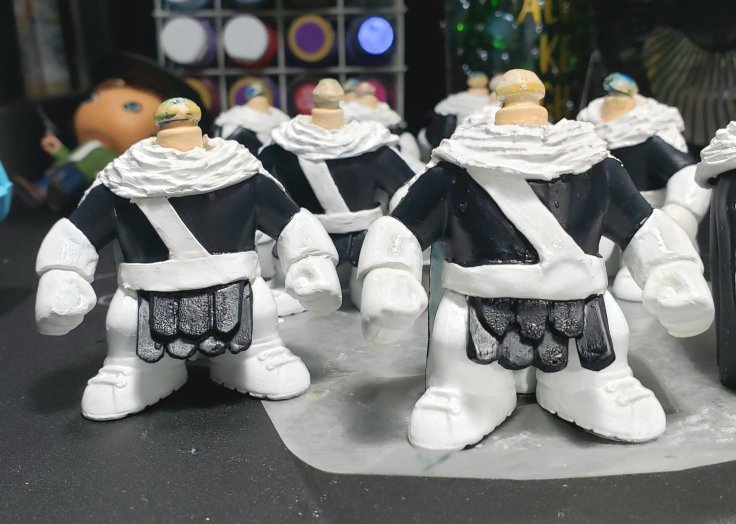
I used Winchester bodies for King!Jensen. Taking them apart made everything more accessible. I was able to sand down the area where the apron went to accommodate the thickness, and to sand down the back a bit to hold the cape. The entire thing was base coated white for the legs, and dark blue for the body.

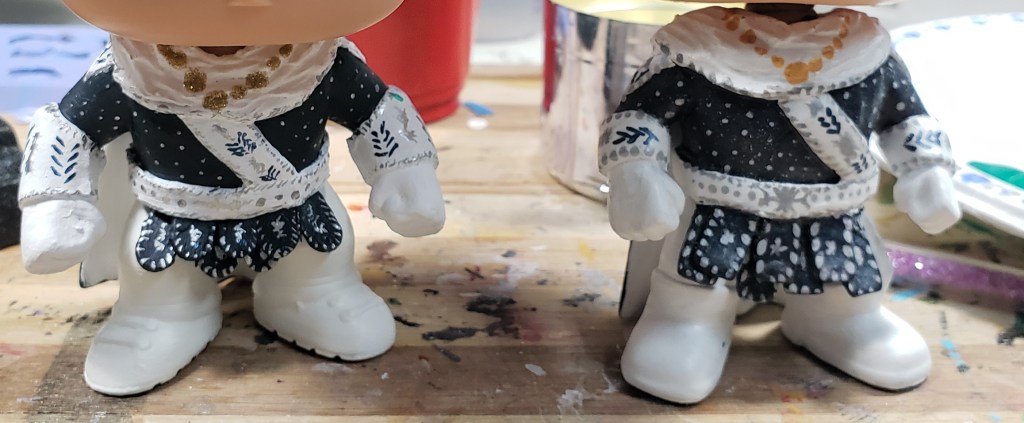
Sculpting is next. there are 3 areas of sculpy here. The scarf, the sashes and the gauntlet cuffs. I found the scarf was great to tie everything together and show the cape as a seamless unit. A curved tool pressed in repeatedly made the drape folds come alive. The sashes are quite thin, and trimmed to clean edges. The gauntlet cuffs fill in the area between his shirt cuff and his wrist. After smoothing with rubbing alcohol, the areas are heat cured, sanded and base coated white.

Painting is next. Coats of dark blue for the tunic and outside of the cape, white for everywhere else. Surprisingly, the white is the hardest! Something always bleeds through. I have 5 or 6 coats on most of them!

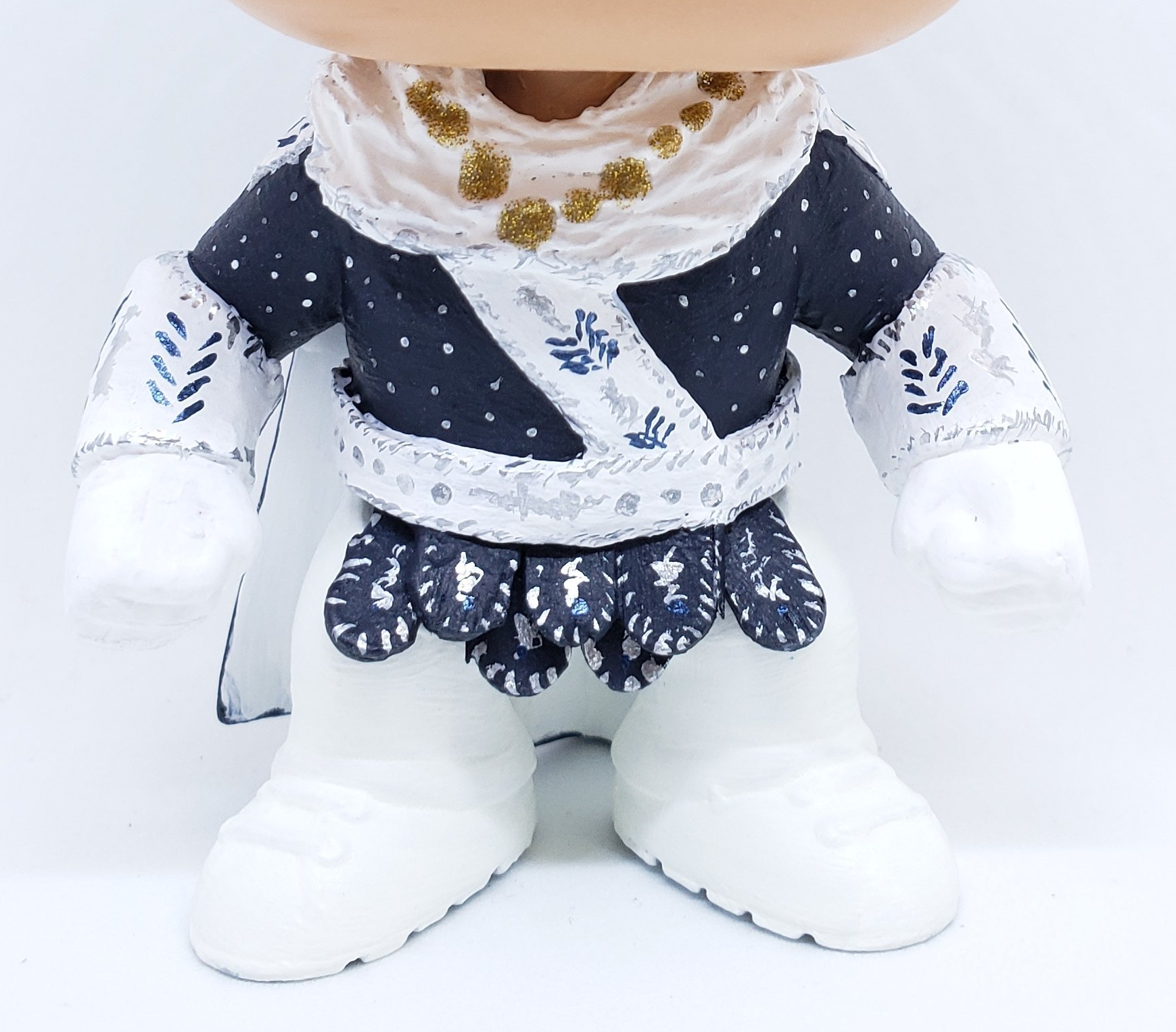
Artist tip!!! DO A COAT OF SEALANT BETWEEN THE BASE COAT AND DETAILING. Ahem… I really want to stress this. Nothing worse than having to repaint the whole thing because your brush slipped. The chrome paint doesn’t wash off easily, but the base coat gives you a smoother surface to wipe.

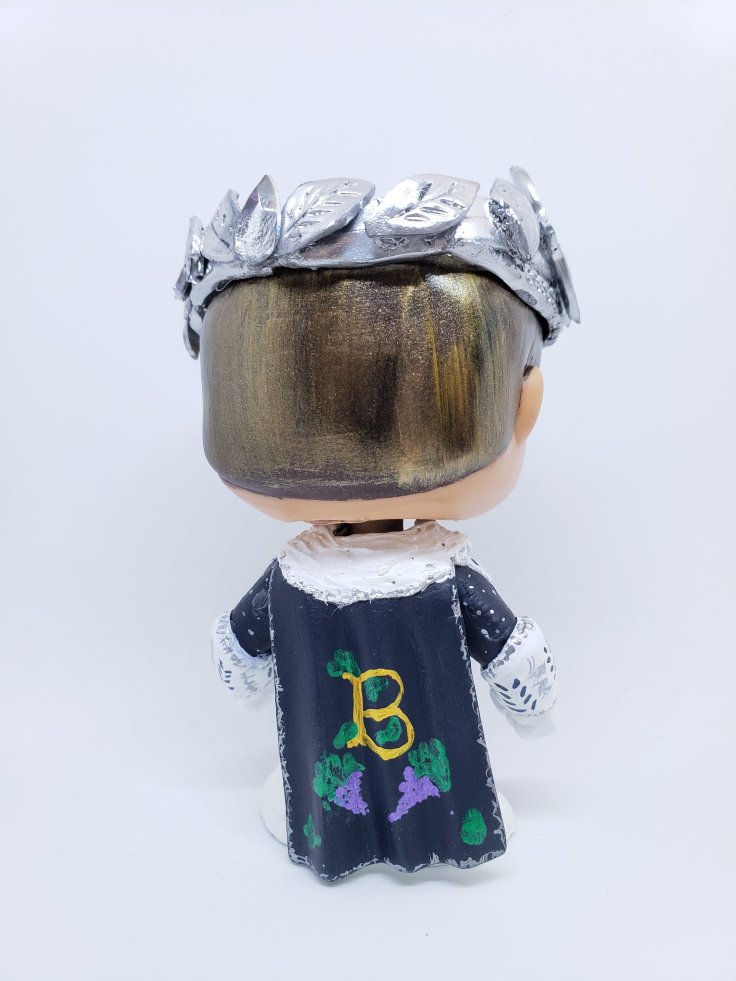
Detail paint is incredibly labour intensive. Magnifying glasses and tiny, tiny brushes are a must. I do the chrome paint first, dots on the tunic, embellishments on the gauntlet cuffs, sash and scarf. Next is metallic blue for the leaves on the cuffs and sash. Finally the stylized B and grapes for the back of the cape, also in metallic paints of green and purple. Once everything is dry, another 2 coats of sealant.

Two different styles of details

Now to finish the crown. when the resin is cured enough to hold it’s shape, but still malleable, I shape it and glue it. two full leaves, one on each side, and some individual leaves to fill out the back. Once dry, it gets 2 coats of chrome spray paint and some time to dry. The jewels are the shining finish. Each one is a bit different, depending on where things are glued. It’s important to choose the right glue as a lot of glues will bubble the backing of the rhinestone. I find weld bond works best for me.

Lastly is putting it all together! Heating the crown a bit to fit it better to the head, then gluing it on, and King!Jensen goes in the drying box for a day.

Long process, but I love how he turns out! Let me know what you think!

A WordPress.com Website.

Up ↑