The Workbench Part 1

I will never say there is a “right” way to do something (except for safety). Today I will show you my workbench set up. It’s right for ME, but you’ll find your own best set up. We’ll cover tools and layout today, Next post will cover accessories and supplies. 

Layout
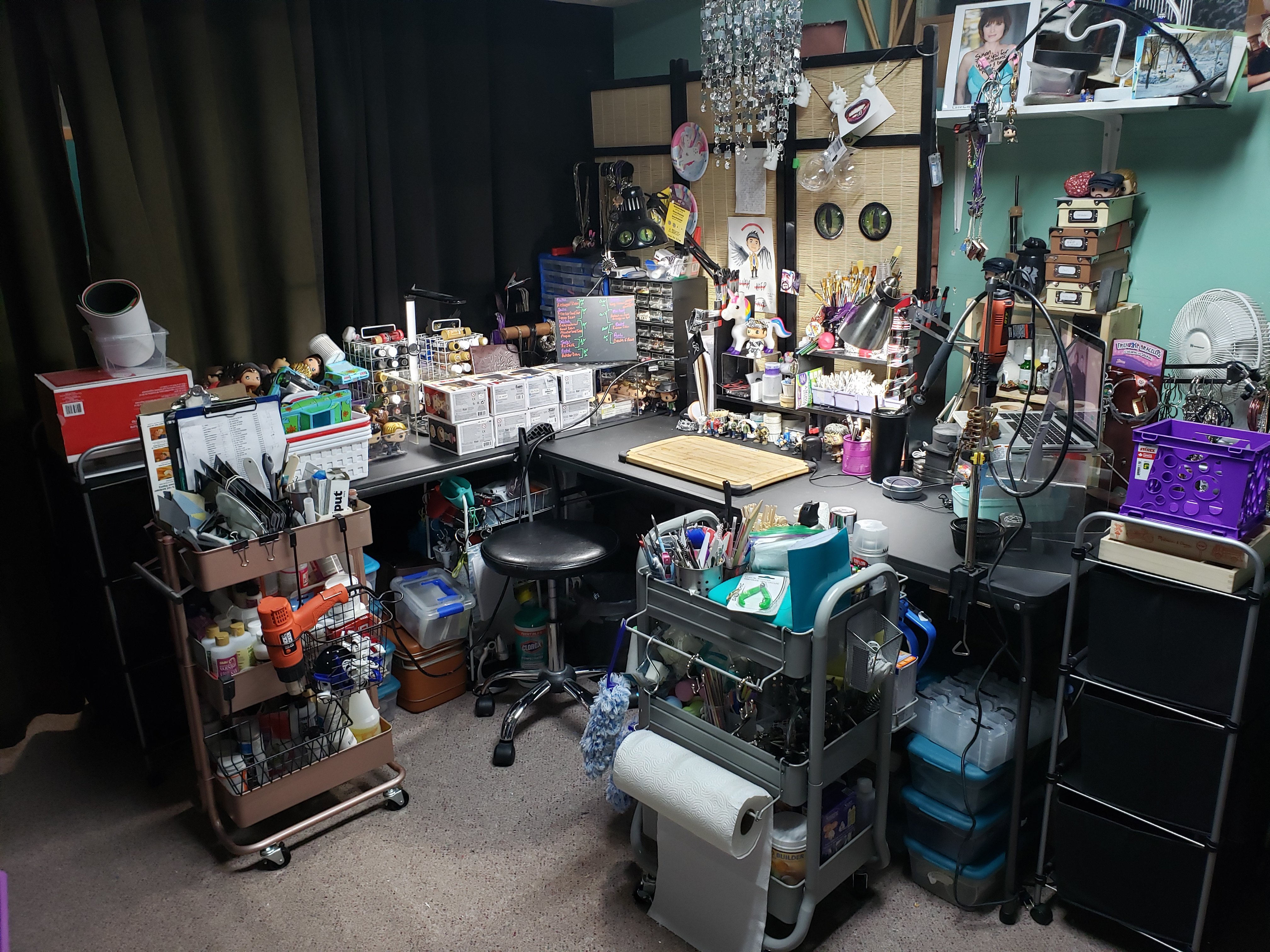
Wide view of the workbench.

I’ll start with the basic layout. I use an L shape comprised of two plastic tables. I also have a wooden tray table that is supposed to be put away at some point, but .. meh. The wooden table holds my Windows laptop, so it’s used for references and entertainment. Directly in front of where I sit is the cutting board that I work on 90% of the time in an effort to reduce the damage to the table. It’s easier to replace a cutting board. In front of that is the shelving that holds disposable supplies, brushes, acetone and such. Most importantly is my mascot, King Jensen, unicorn and Bacchus coin. Above are things that make me smile.
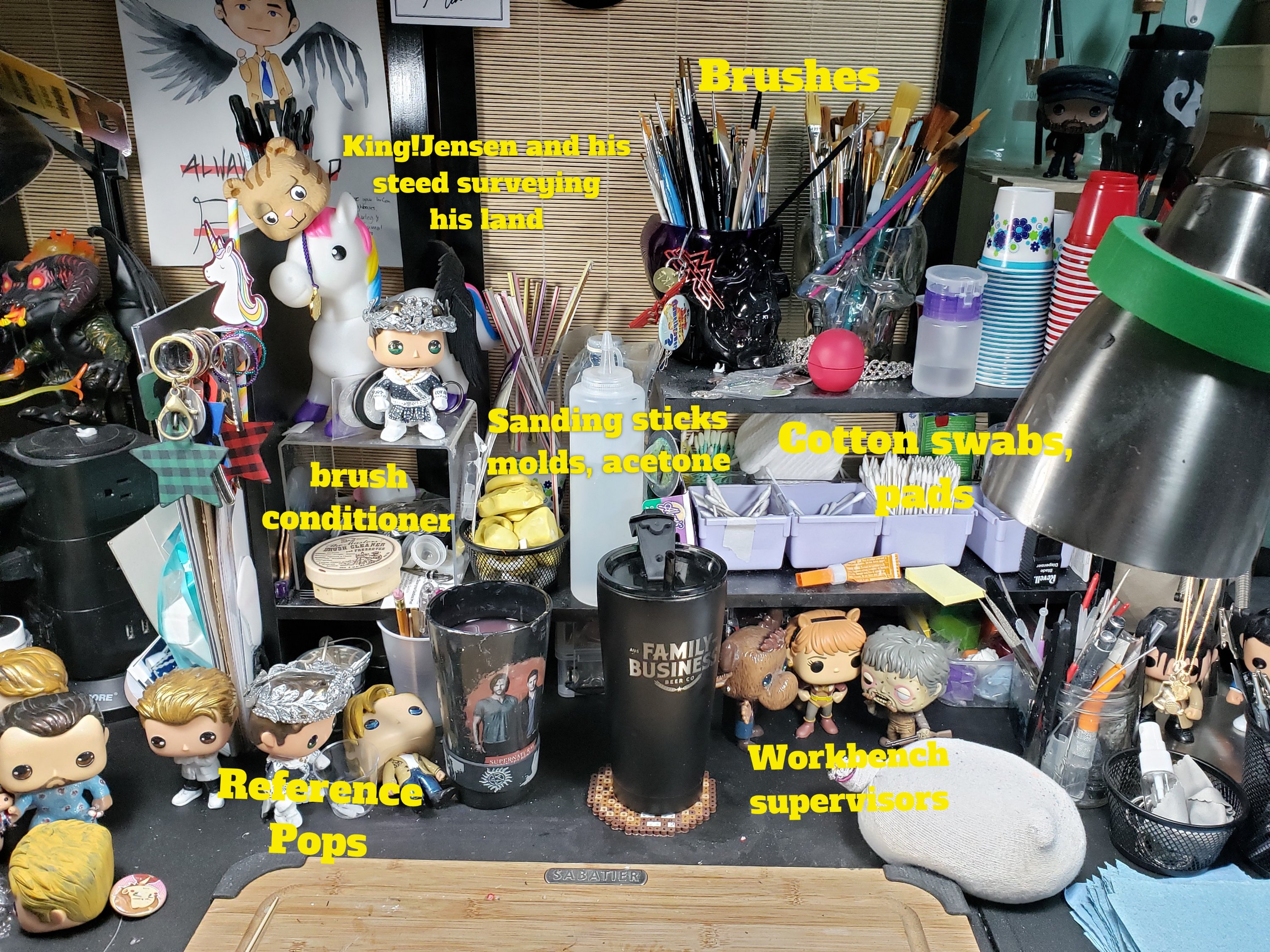
The heavy use area of the workbench. With the important things, like my winged unicorn impaling a bear/tiger while King!Jensen rides him

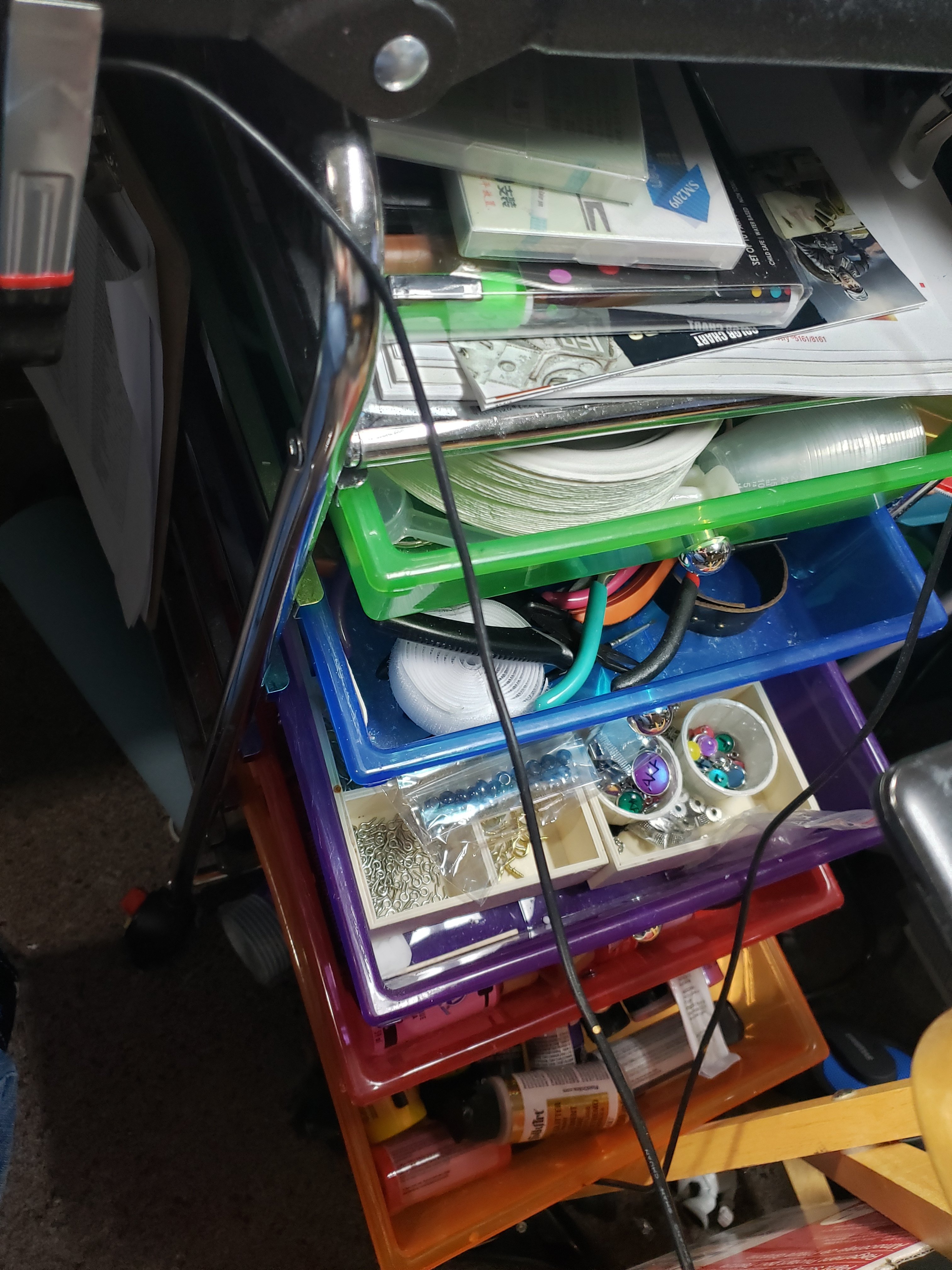
To my left is my planner, Mac (used for watching Supernatural while I work) and containers with sculpting tools, sharps, glue and my workbench list sorted by due dates. Below that is a set of drawers with plates (my palette at times), small tools, AKF raw materials, overflow paint and specialty paint (colour change, metal finish and such)
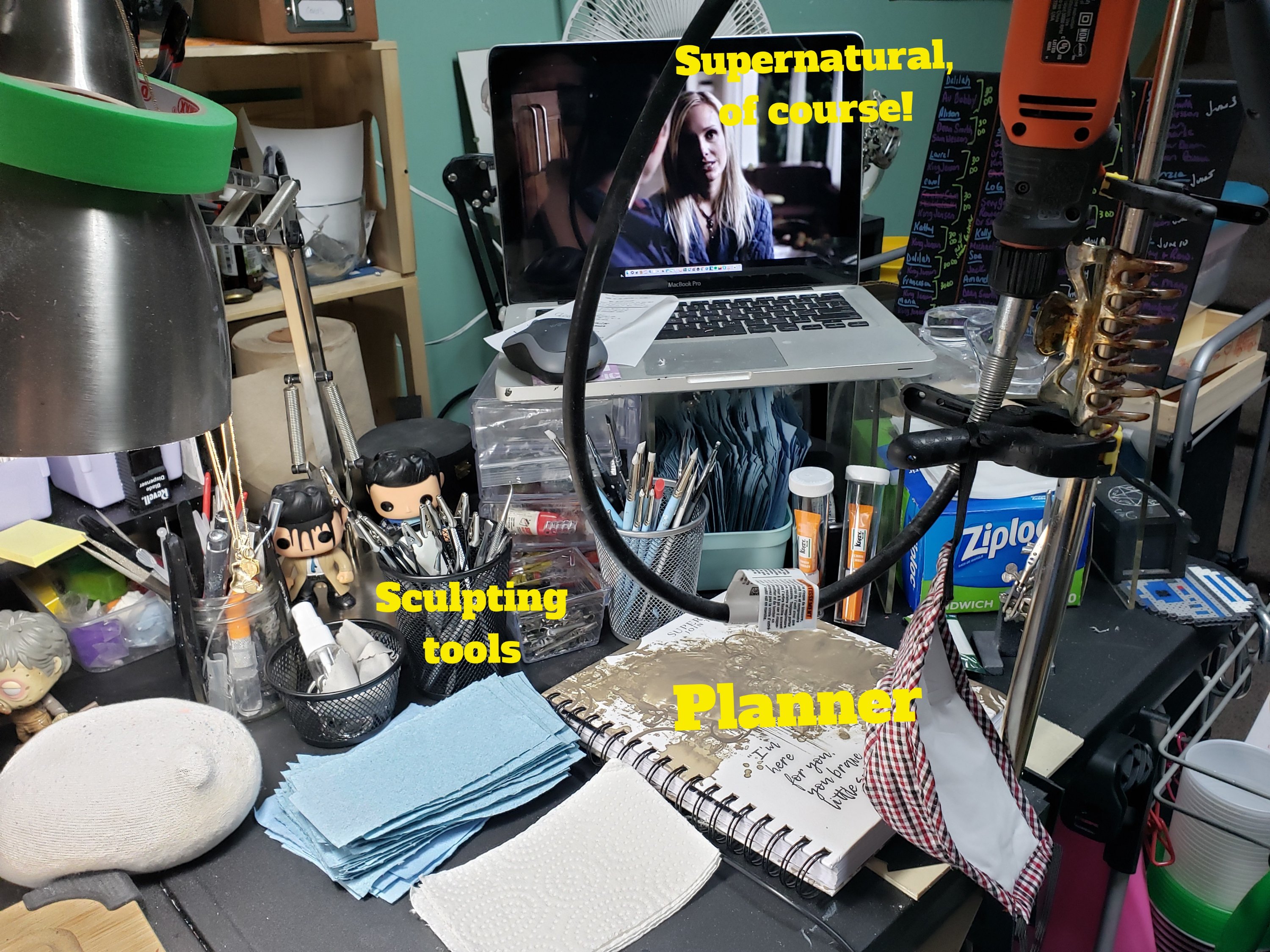
To the right. on hand things
The drawers that hold common things like plates, tools, akf and extra paint

To my right will be broken into 2 areas. Pops and Jewelry/etc. For Pops, this is where the containers of pops on the go are stored and labelled. Weekly I go through new orders and gather the supplies (bodies) I need, break them down and sort. This lets me grab parts I need quickly. Also is my main paint storage, made from PVC pipe. I kinda love it. My metallic paints are in the separate holder for ease. Above that is a light, finished pops waiting for the rest of their orders and my bits for the Dremel.
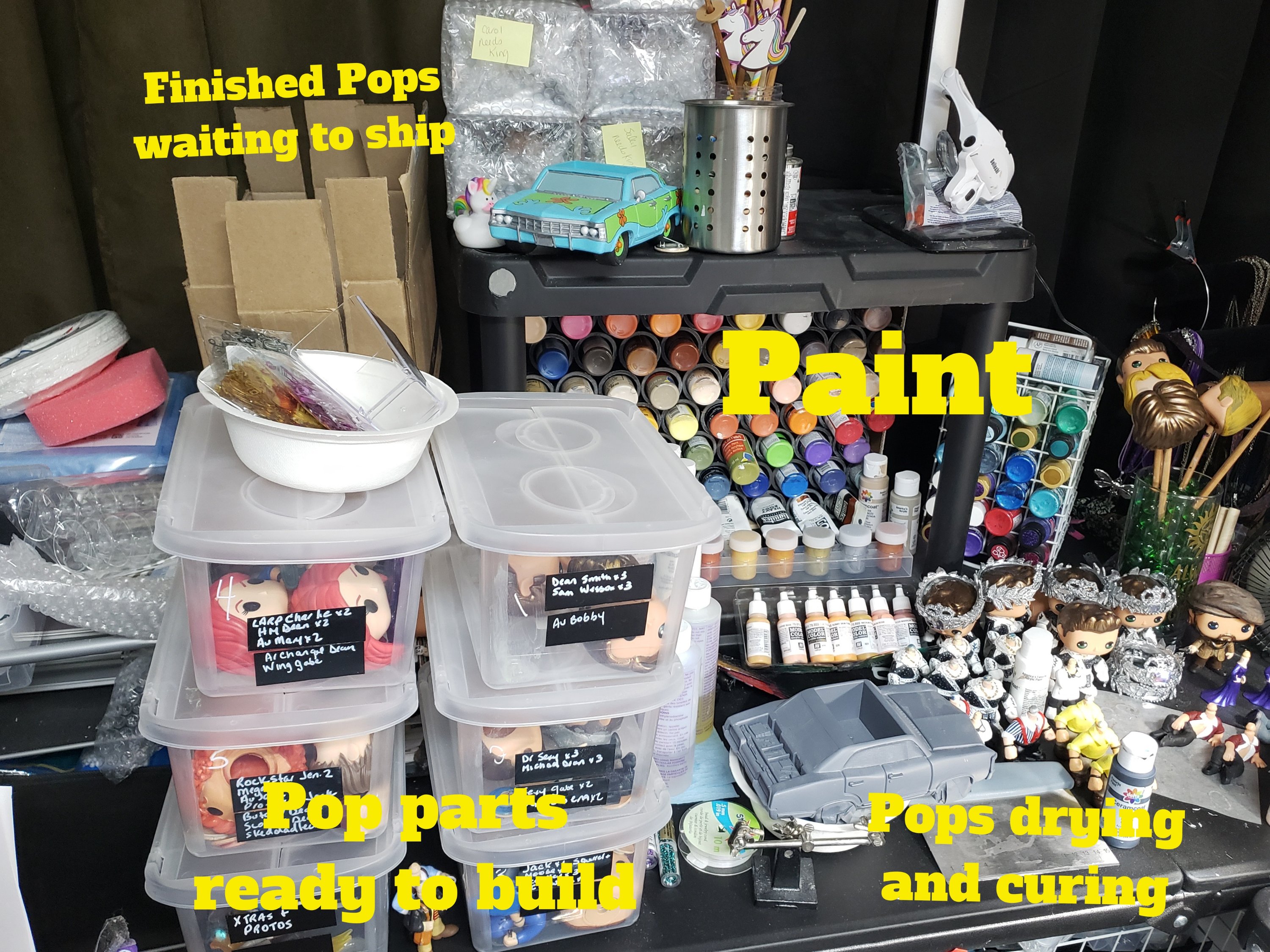
To the left. Prep area, drying are and paint

The Jewelry/etc area is in the corner. Holding the storage for charms, items in progress and stands to hold chains and leather strapping. There are other containers holding more supplies that are brought in as needed. This poor area has been neglected lately with the amount of pops on the workbench.
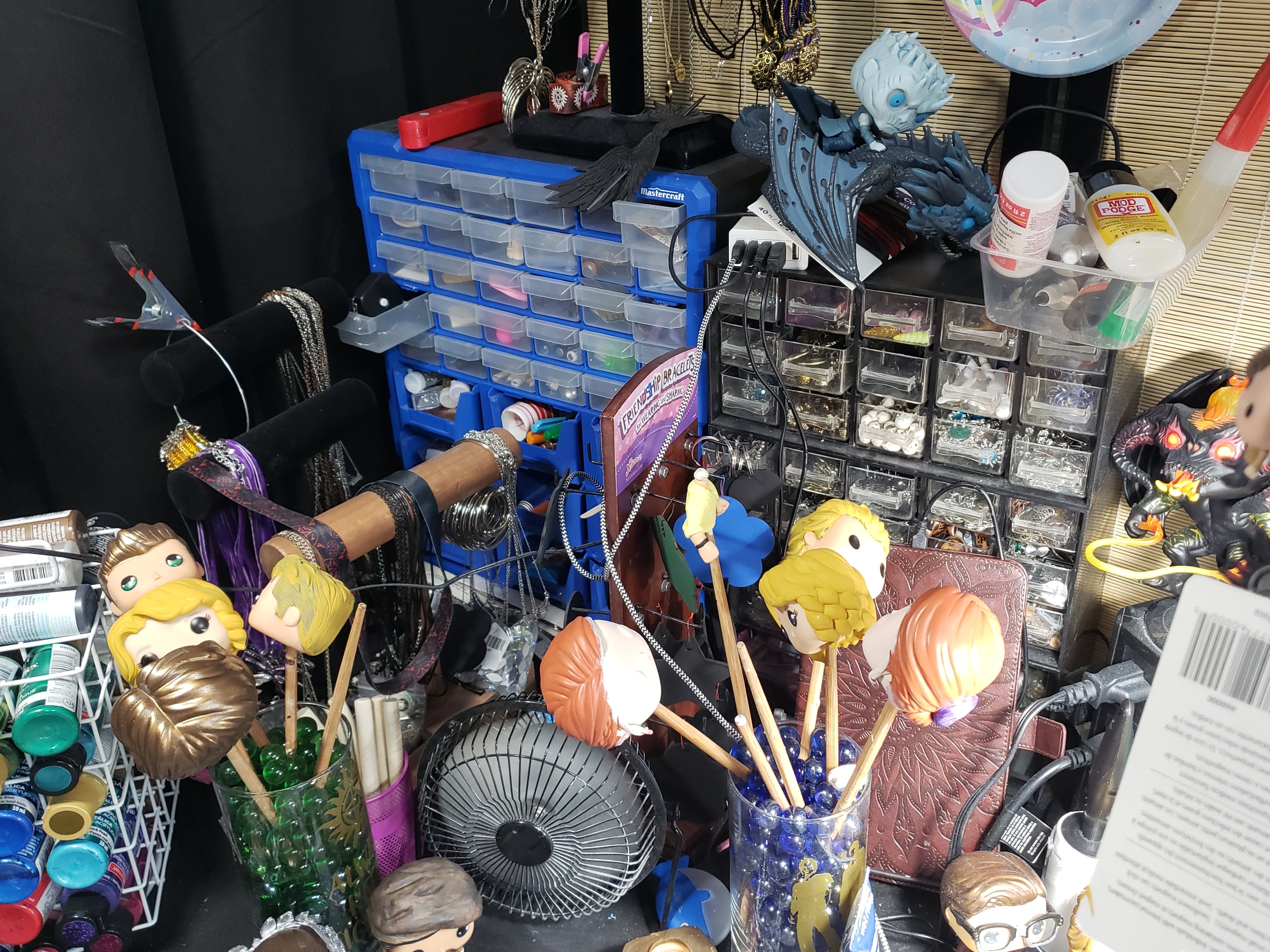
Jewelry area, cramped now as pops are taking over!

Below is …. well… stuff. It’s cabochon storage, Metal stamping supplies, wax seal supplies, polishing supplies and anything else I can’t find another place for.
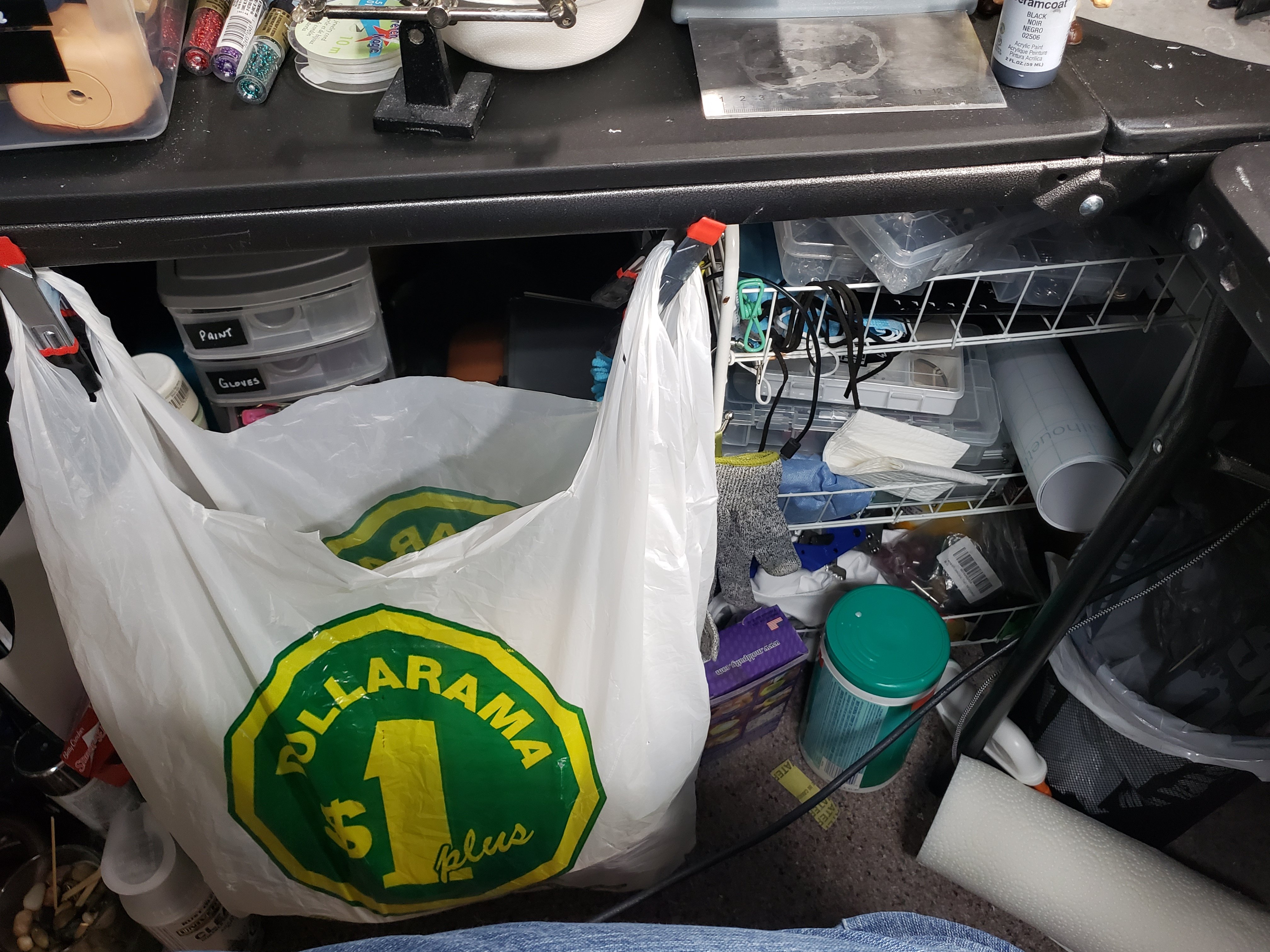
Everything else. garbage bag, paints, metal stamping, cleaning, spray paints,

Tools

The first thing to know is NONE OF THE TOOLS ARE IMPERATIVE. They make things easier, but you can start with just basics and still do a good job. I’ll outline what I use most and why, but you’ll find what works for you. A lot of what I use are geared to mobility. Anything to ease my hands is helpful.

My Rotary Tool is one of the 2 most used items. With different heads it can cut, smooth, carve, polish, sand and makes quick work of a lot of the processes. I have an off name one, bought at Canadian Tire for about $40 (CDN) I splurged and bought a flex shaft attachment which is incredibly helpful. it allows easier movement and longer use without less hand strain. Most rotary tools have similar size of shaft so heads are often interchangeable, especially with different colletts.
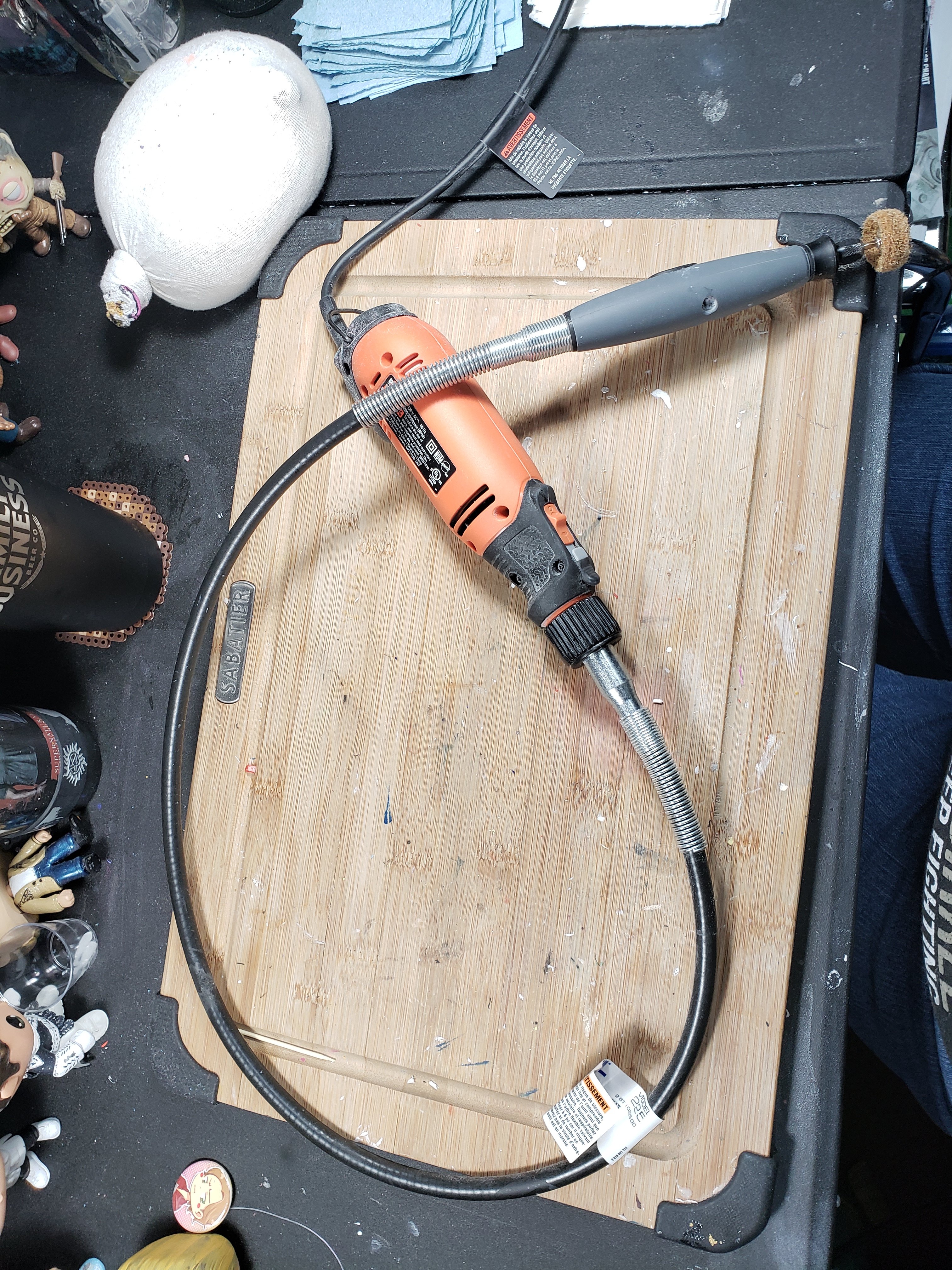
Black and Decker Rotary tool and Dremel flex shaft attachment

My Heat Gun is the 2nd of the 2 most used items. It cures polymer clay, heats pops to move arm/leg positions, softens glue to take them apart, heats plastic to form into shapes and occasionally heats up my lunch! I have a Black and Decker dual temp gun, but started with a craft heat gun meant to heat embossing powder that I bought at the craft store for 19.99 that worked just fine. The scale of what I do made it impractical but for most that, or even a good hair dryer may accomplish what you need. You can use an oven to cure sculpy and that works fine, I just don’t want to keep schlepping upstairs, so the heat gun is quicker and more direct for me.
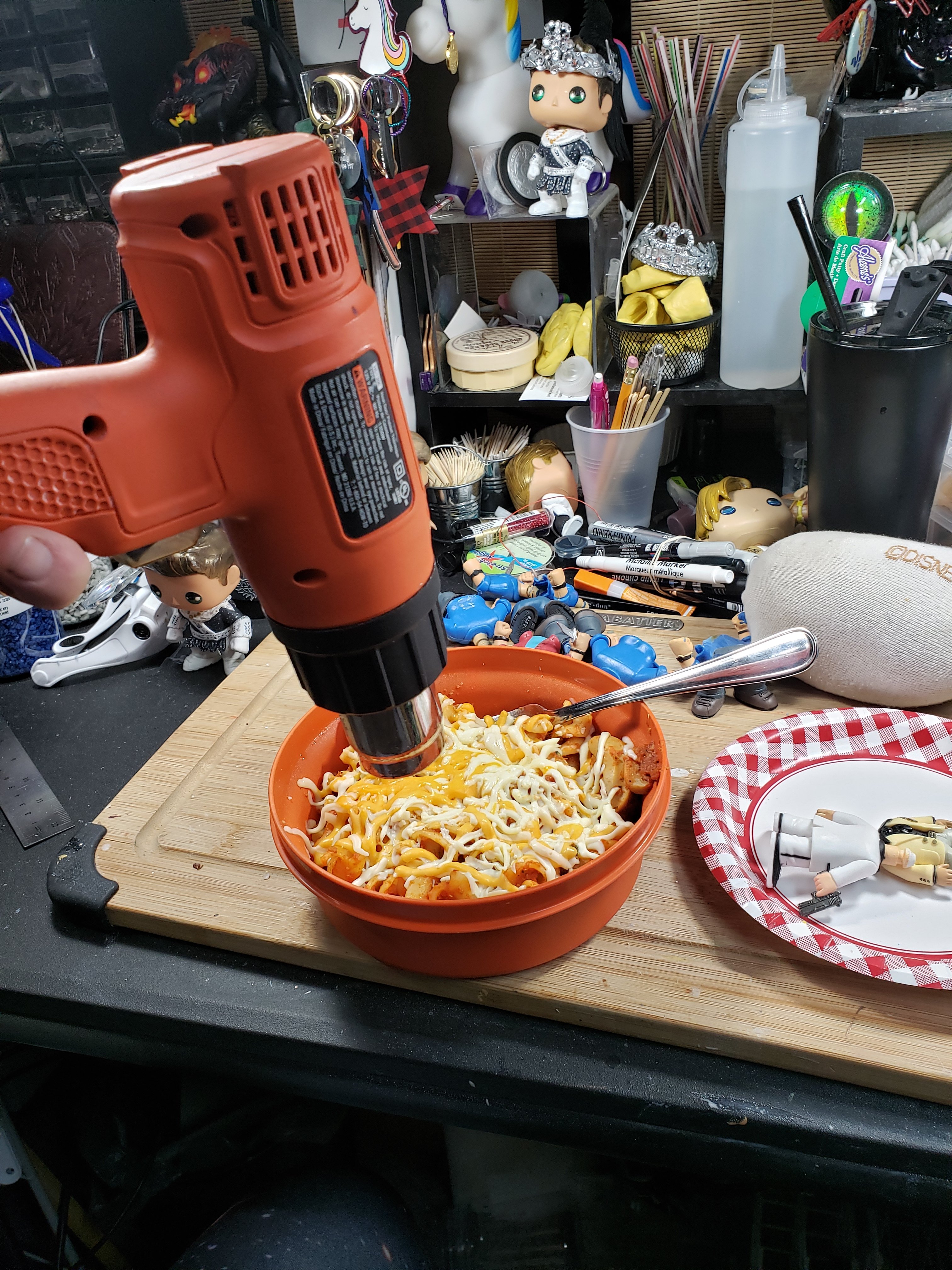
Black and Decker heat gun doing important work!

A Hot knife is something I use on occasion. It works when you need to cut your pop or plastic fairly detailed or neatly. The one I have can also burn wood and has a series of attachments. I don’t pull it out every day, but when I do it’s always a good time saver and helps with neat cuts.
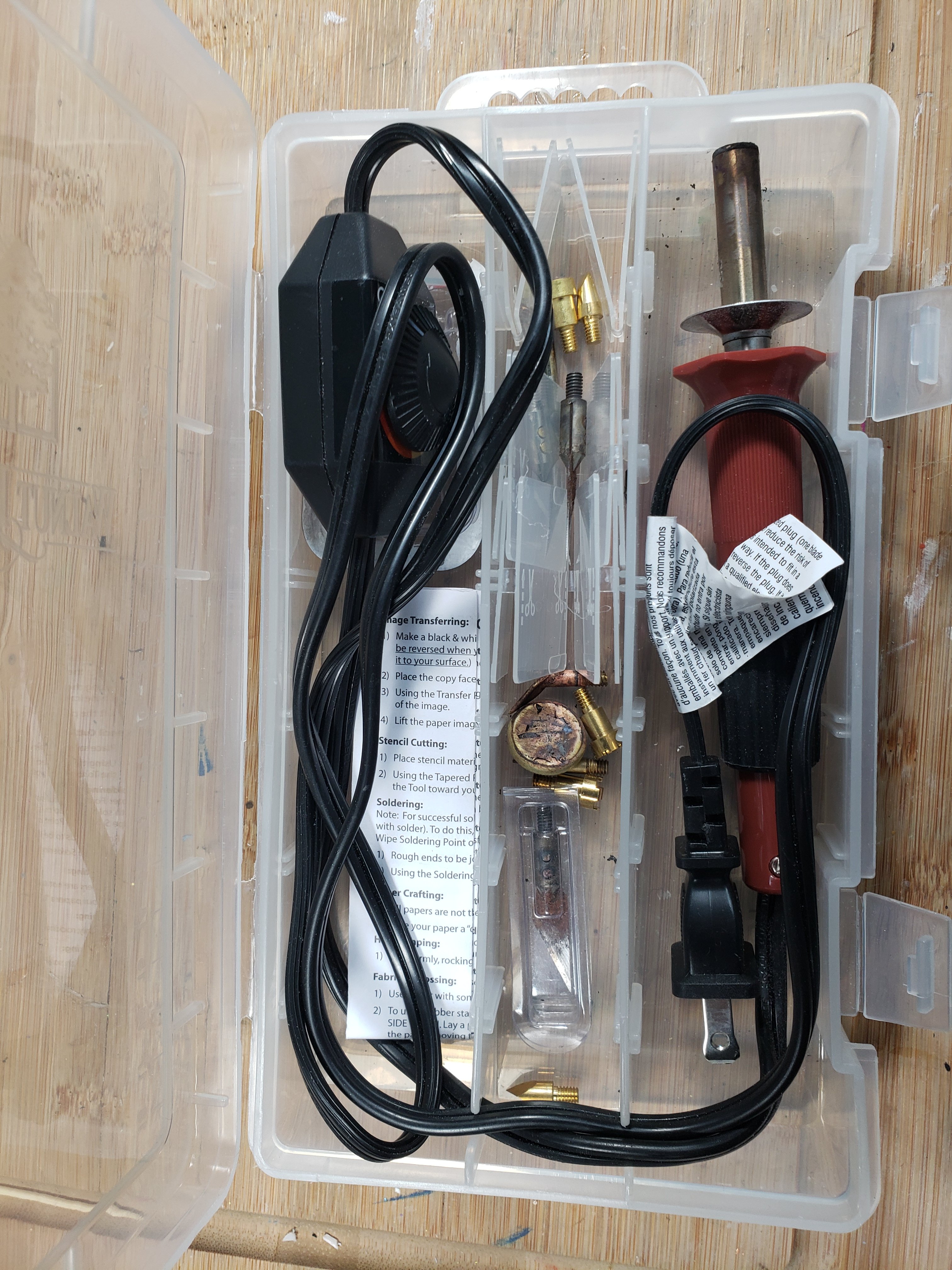
Hot Knife/soldering iron/hot stamp. Useful but not used as often because of heat up/cool town time

A glue gun is handy for some, but I don’t use it often. Usually just for Sparkle the Manicorn to glue his hair down. The pros is that it is a quick hold, but often not strong enough for many items. It can help to tack things in place while you wait for the better glue to set. It can also be used to make designs, like on the Book of the Damned, to be painted over. For glue, I prefer Weldbond, E6000 or Super Glue, keeping in mind Super glue will dissolve paint, sometimes dries white and is not suitable for rhinestones as it will bubble the reflective backing.

Not a glue gun. It’s put away and I’m too lazy to dig it out right now.

These are the basics. There are others, knives, scrapers, clamps and such, but this is what I use on a daily basis. Again, to stress, you don’t need all this to start. You can boil your heads to get them off, use a hair dryer to soften glues/bend arms and sand by hand. Once you get the feel for customizing, you can decide if you want to invest in some tools. Feel free to leave a comment or question below!

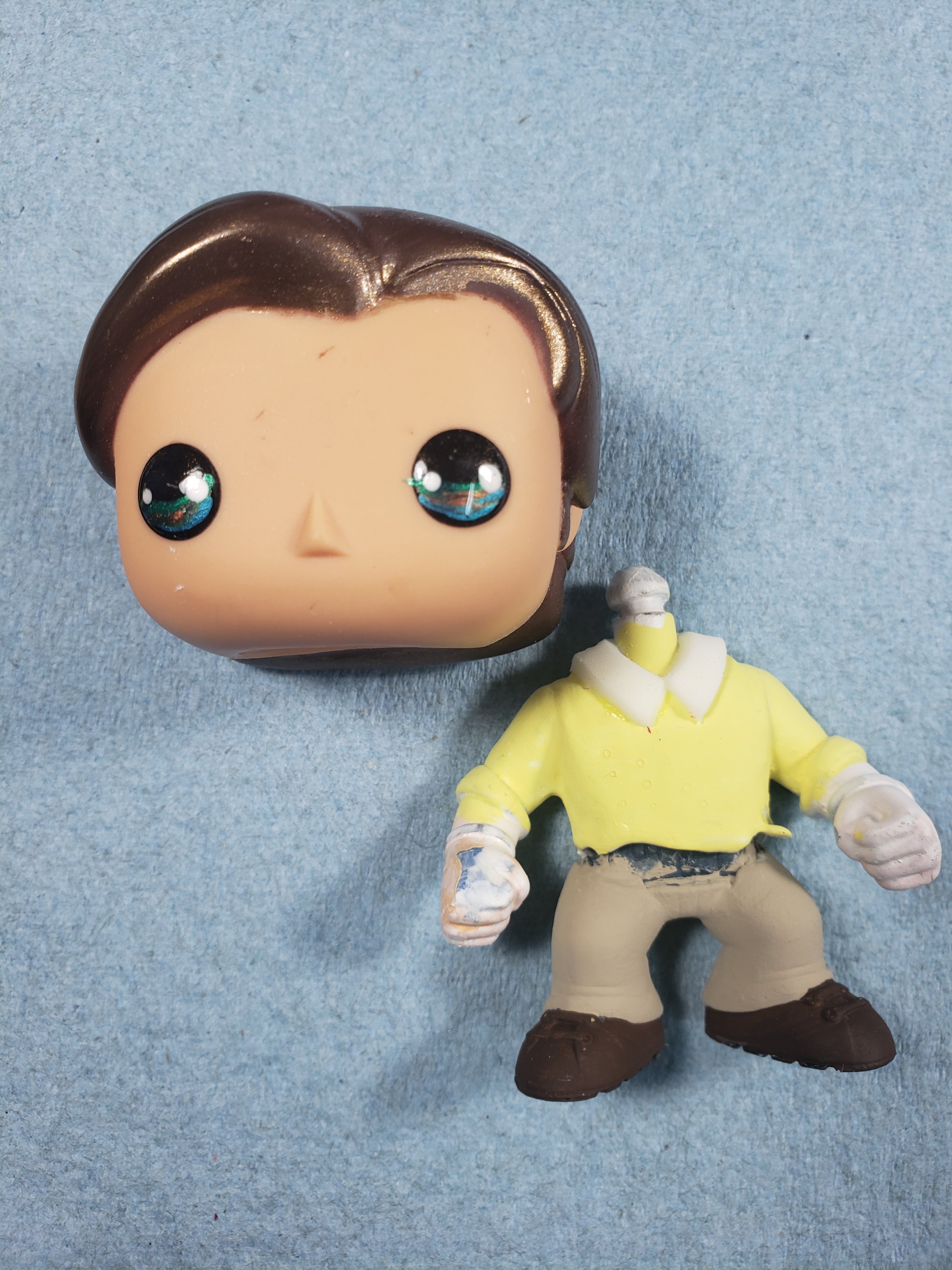
Recapitation .. is that a word?

So… Once you’ve taken your pop apart. Now what? Pops get taken apart for a LOT of reasons. To sculpt and paint with more room, to interchange pop parts from different figures, to change positioning of limbs just to name a few. Once you’ve done your magic, you need to put them back together. Today we’ll focus on Frankensteining your pops into a whole being(ish). Kind of important, and sometimes tricky.

The Head

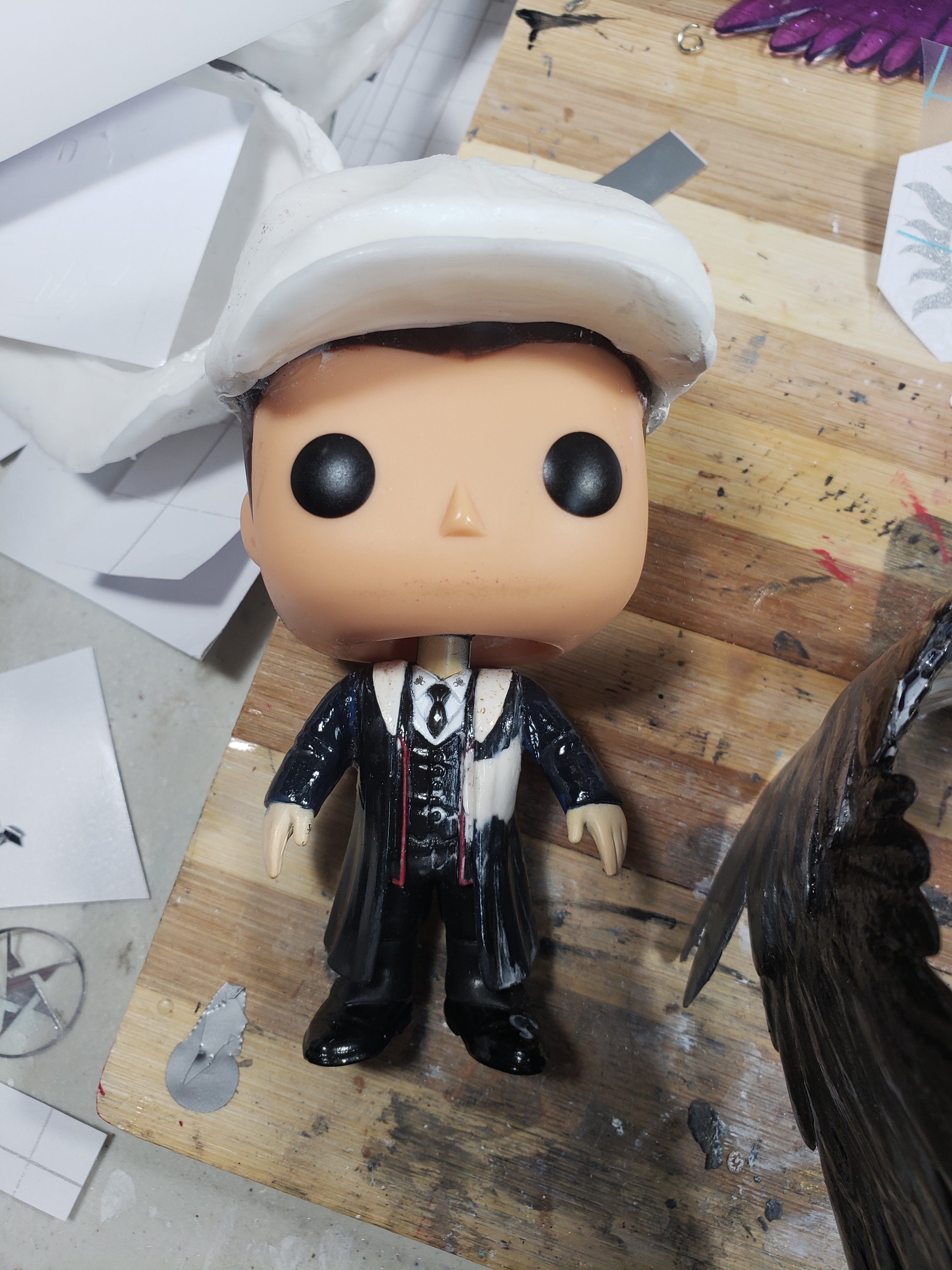
When you are just taking a pop apart to paint/sculpt and putting that head back on that body, there is little issue of fitting. Sometimes the neck piece gets warped, but generally the process is quite simple. If the head has the plug in, I heat the plug area to soften the hole and pop the neck back in. Here is where a heat gun shines as you can’t effectively boil the head once painted/sculpted.

Easy head to pop right back on

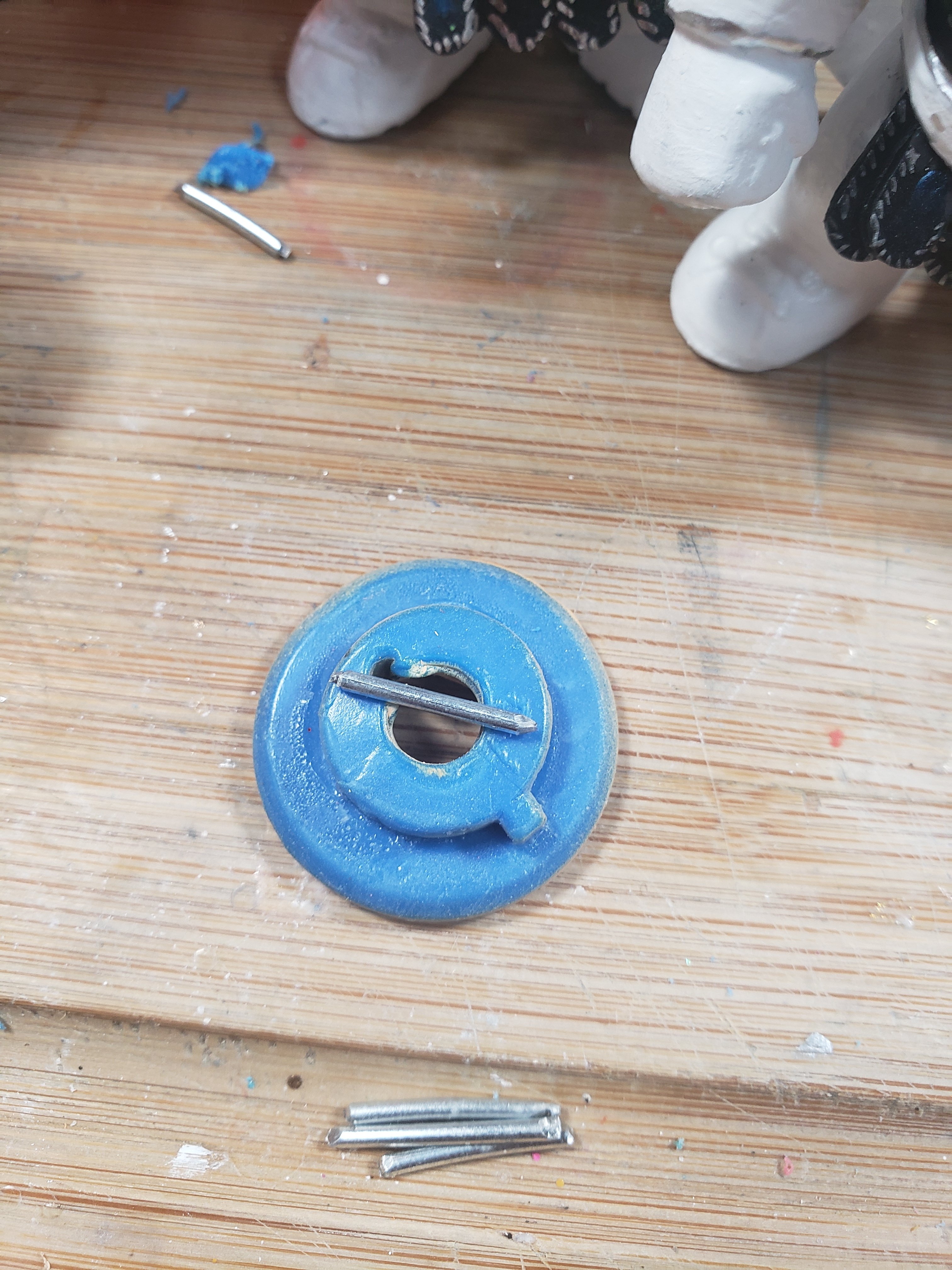
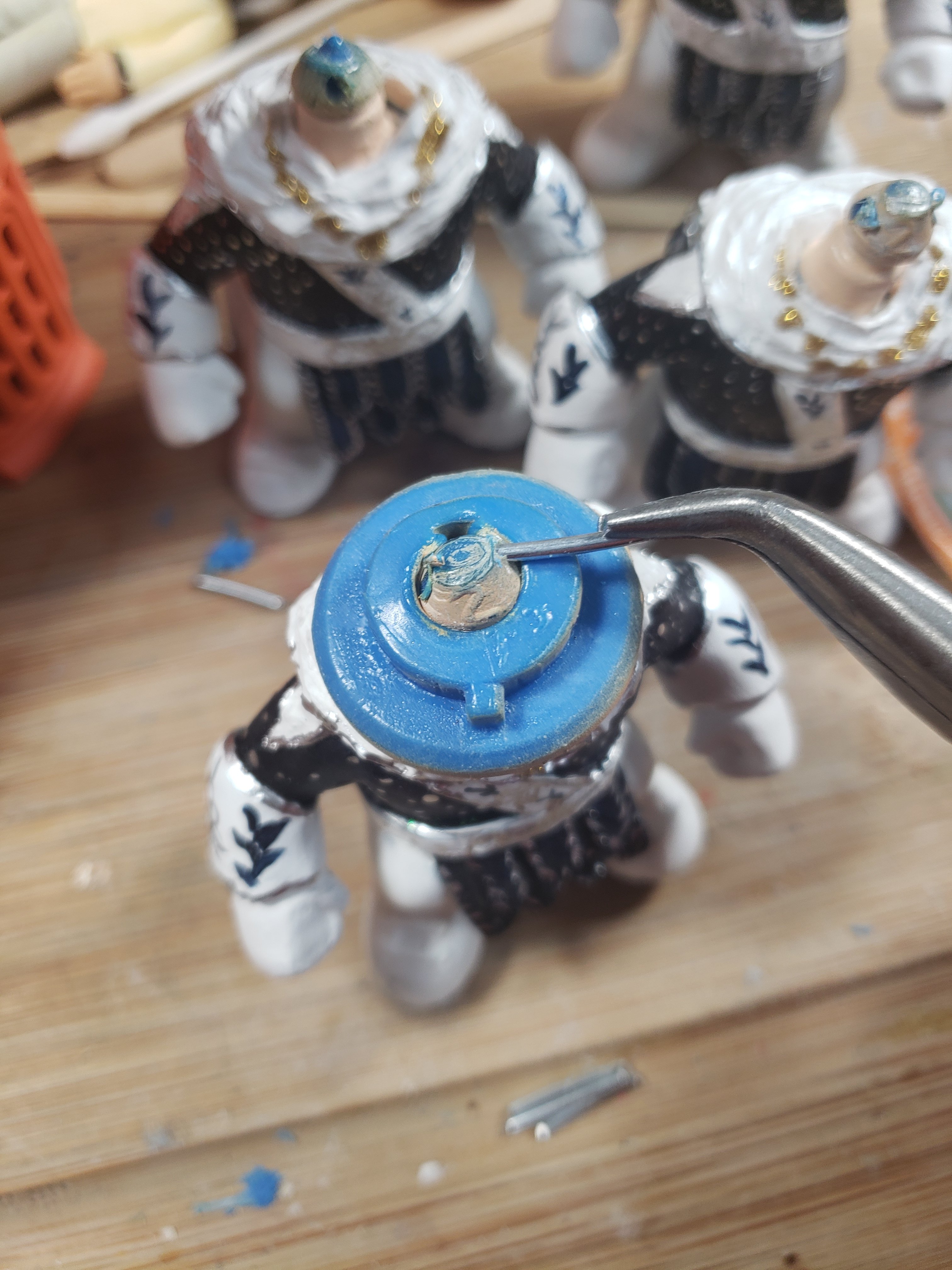
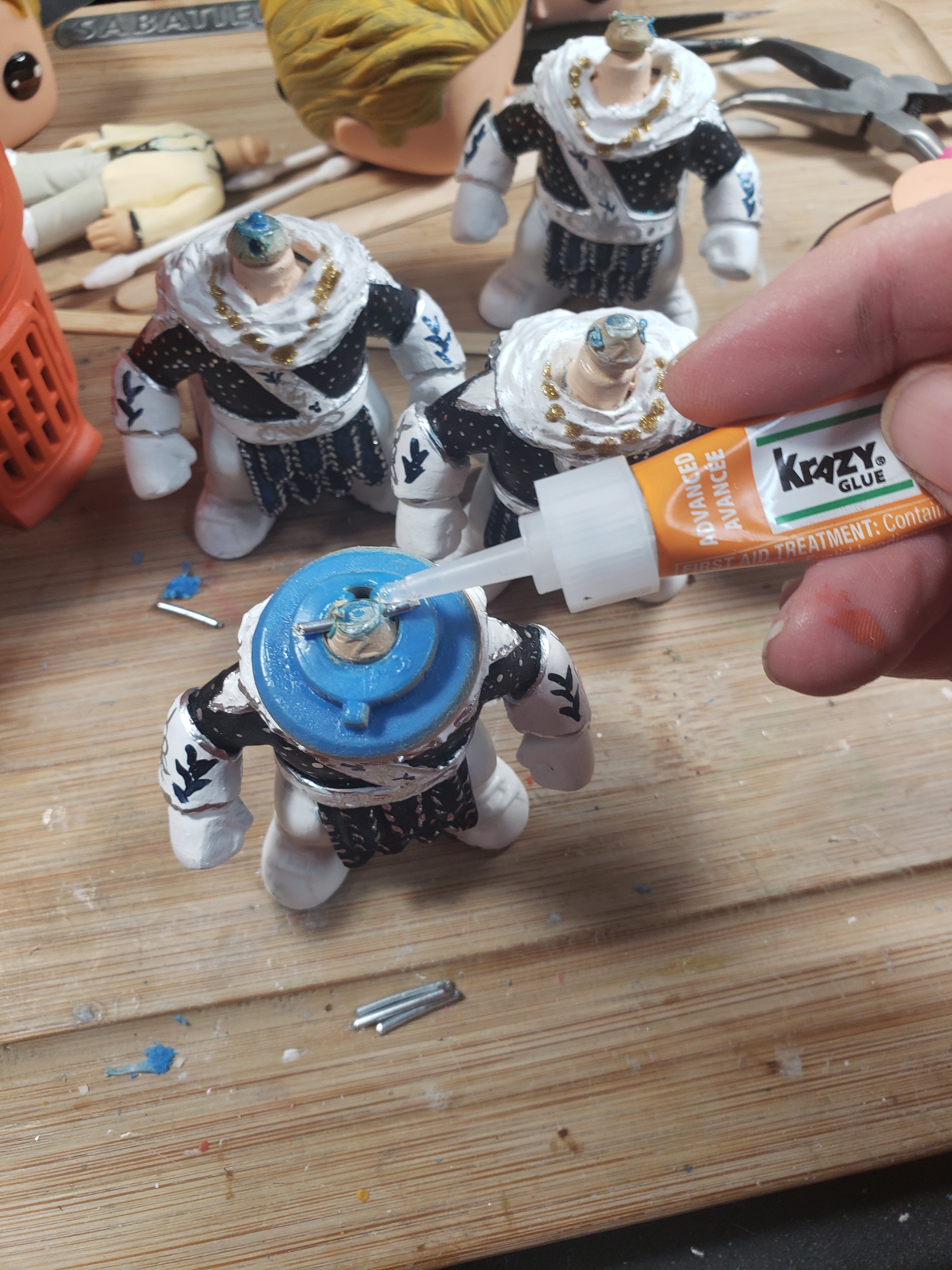
If it’s a different body for the head, sometimes you need to get creative. My most used way to ensure that the pops don’t lose their head is to use a wire anchor. This only works if the head plug is out of the head. Using a small drill, I drill out a hole in the neck piece (very phallic item, I must admit) that is just big enough for a piece of lower gauge wire to fit through. I can’t honestly tell you what gauge I use because it’s a dollar store roll of wire from the garden center. It’s difficult, but possible to bend if that helps. Then I soften the head plug, fit it onto the neck piece, and push the wire through to anchor the head plug in place, still allowing it to turn. I add a dab of glue CAREFULLY to the top of the neck piece/wire connection to secure it. Too much glue here will stop the head from turning.

Sadly, if the head plug won’t come out of the head, sometimes the best option is to glue it into place. Just make sure your head is positioned properly as you won’t be able to move it after.

Arms

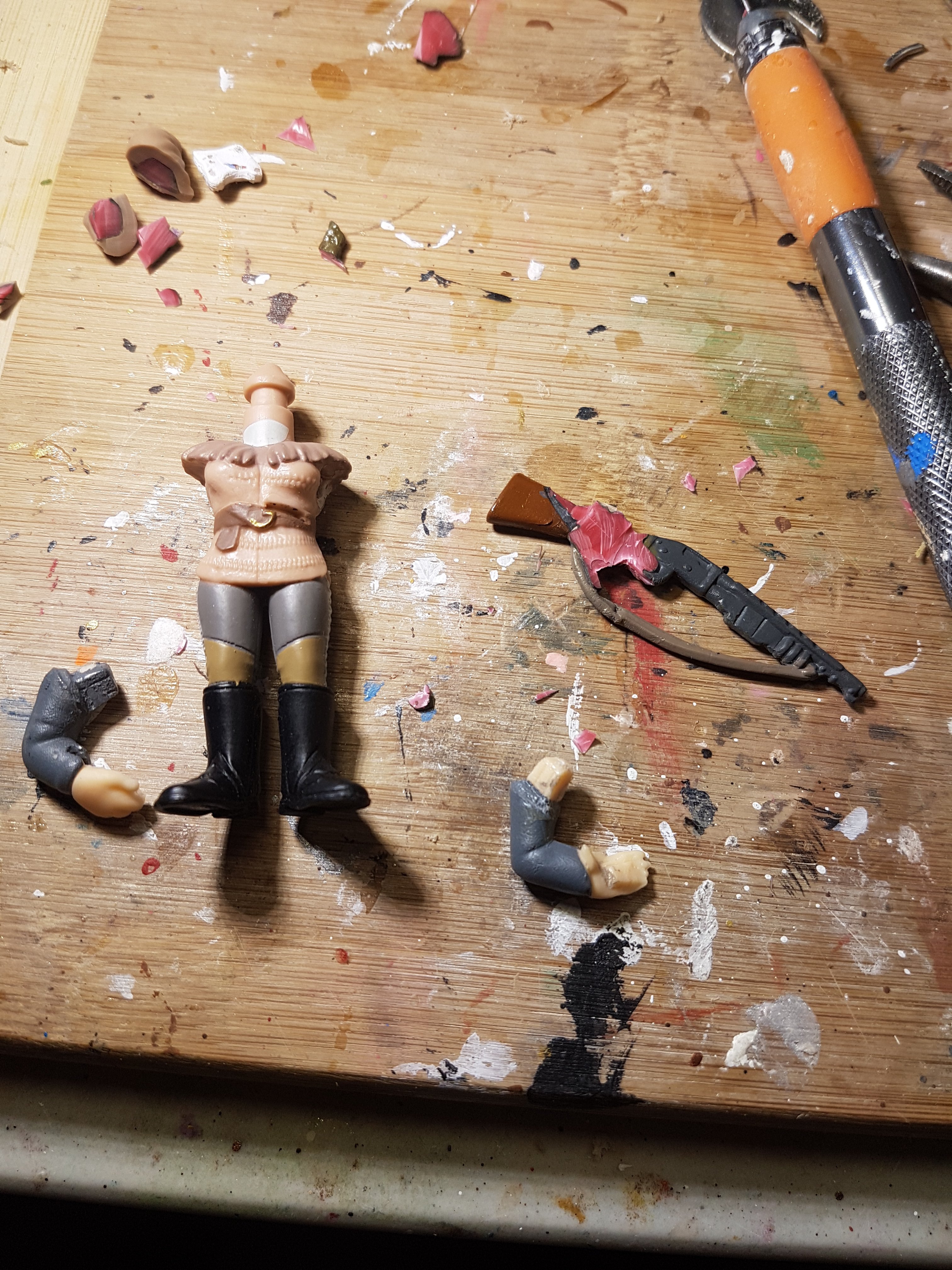
Arms are another piece that often need adjusting. The most common pop I change the arms for are Michael!Dean. His base (for now) has one arm with wide sleeves and one arm bent on his waist. I take both off, and sand down the wide sleeve (We’ll cover sanding and finishing in another post) of the straight arm. The bent arm is not used, and I fill in the hole in the body with sculpy, or milliput. I choose a straight hand that somewhat fits the look and sand it to match. Then the arm is dry fit, cutting the plug or widening the arm hole to fit tightly. I heat up the arm hole and plop some glue in and press the arm in. It’s important to hold REALLY tightly until the glue does an initial set so make sure you have some cotton swabs handy to dab the excess glue with your free hand. Once it’s set you can leave to fully dry. Once dry, they can be slightly heated to do a final positioning if needed. I recommend doing any major arm changes, like bending, before putting it back on the pop to avoid breaking the glue bond.

Don’t worry, they’re ‘armless.
New arm and the full from removing the old arm

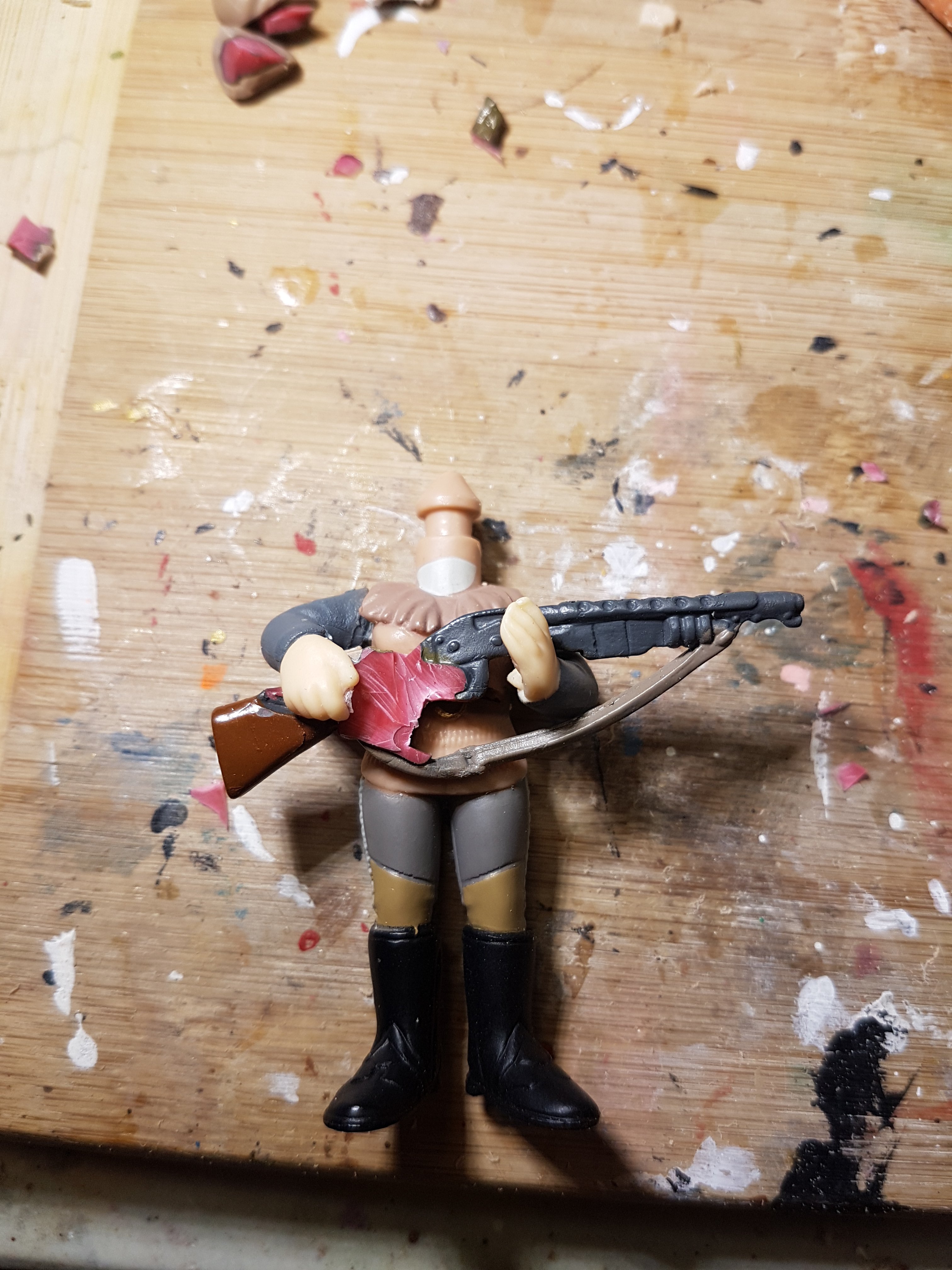
Most body attachments are just “Tab A into Tab B” situations. Occasionally you need to do flat cuts as outlined in the decapitation post. To attach these together I use wires to brace it from the inside. A dot of paint on one piece, carefully pressed into the other piece will give you placement of the holes for the wire. Drill, insert the wire, and test fit. Do any preliminary sanding you can to minimize what you have to do later. fill all holes with glue, insert the wire, glue the flat pieces and press together. Hold firmly until they stick, then tape/clamp them to dry. Once dry, do a final seal and fill the crack with the medium that will work best for that. Sometimes I use clay, milliput, resin, or liquid sculpy to fill depending on the texture I’m looking for and the strength that will be needed.

4 different pops went into this.
They all fit!

Now your pop is whole! You can proceed with the steps needed to finish and make it yours! As always trial and error will be needed. I recommend trying to find really cheap pops you don’t care about (garage sales and thrift stores are great for this) so you can practice what works for you before you try the big one. I have messed up expensive pops, it may happen, but don’t let that deter you! Some of my mistakes have turned into my best work!

A WordPress.com Website.

Up ↑